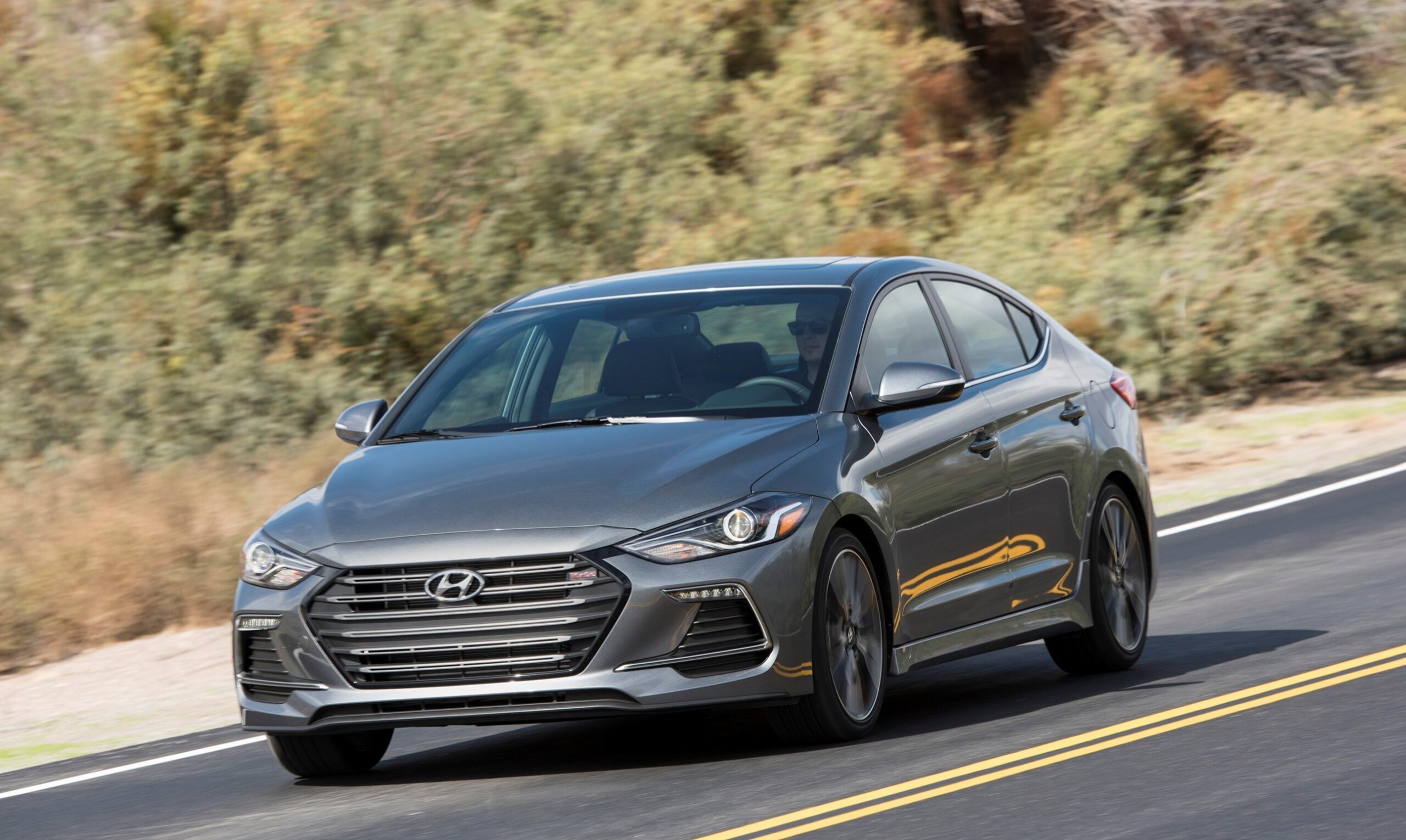
Before N came along, enthusiasts never equated Hyundai with thrilling performance. However, that didn’t stop the brand from bringing sleepers into its lineup. Case in point, the Hyundai Elantra Sport sedan and GT Sport hatchback. Originally a simple trim with a sportier look, the Elantra Sport evolved into the Civic Si fighter no one saw coming. Alongside the Kia Forte GT, this spiced-up compact quietly sowed the seeds that eventually led to the arrival of the N brand in North America. How’d it do it? Honest performance that focused on fun instead of fancy gadgetry, insane power, and party tricks.


Hyundai Elantra Sport: A Spicy Kick
If we were to describe Hyundai’s performance cars based on food spice levels, N models sit at the top as the hottest, most fiery ones. Its predecessors, including the Hyundai Elantra Sport, are like a medium spicy gochujang chili paste, if you will. Once you drove them, it immediately made sense why this sedan or hatchback slotted right in the middle. Good levels of heat without becoming overwhelming.
The Elantra Sport’s engine makes for the perfect halfway point. This 1.6-liter turbo-four made 201 hp and 195 lb-ft of torque on regular 87 gas. It also came paired to either a six-speed manual or a seven-speed dual-clutch automatic gearbox. Regardless of transmission, this engine served up plenty of power without much turbo lag, meaning it made passing, accelerating, and climbing super easy. More importantly, it helps that the engine was also a wee bit underrated, making more power than advertised.
Both transmission options allowed you to maximize the engine’s output. Hyundai geared the six-speed manual to take full advantage of all that mid-range torque. That results in a satisfying drive, especially with the sedan’s pleasantly deep and raspy exhaust note. Additionally, the stick shift had nicely spaced, short throws that felt smooth and precise. On the other hand, the light clutch with a bite point that’s easy to find made this sporty compact easy to drive in traffic.
The available seven-speed dual-clutch shifted quickly and also exploited every ounce of power from the turbo engine. However, it lacked refinement, constantly hesitating and clunking into gear during low-speed driving. It also got confused easily and didn’t rev-match its downshifts. As a result, driving in traffic had the potential to turn into an infuriating affair because of the transmission’s inability to operate smoothly.


The Perfect Balance
Beyond the turbocharged grunt, the Elantra Sport and GT Sport models highlighted Hyundai’s growing expertise in chassis tuning. Both body styles traded the standard car’s torsion beam for an independent rear, stiffer tuning all around, and recalibrated steering. The result? A really good time in the twisties without sacrificing daily drivability.
These sporty compacts delivered on the fun factor and showed the massive strides Hyundai made in ride and handling. The tight and quick steering told you exactly what the front wheels were doing, keeping you connected to the road. Minimal body roll also bolstered confidence behind the wheel. And if you’re looking to play a little, lifting off the accelerator results in a bit of lift-off oversteer that the driver can easily manage. Finally, when it’s time to chill, the Elantra Sport keeps things firmly comfortable, retaining all the road feel while filtering out harsh impacts.
Although Hyundai equipped both Elantra Sport models with all-season tires, they made sure to use surprisingly grippy ones. As a result, they remained surefooted and glued to the road, even when pushed hard. They also used brake-based torque vectoring to put the engine’s power down as effectively as possible. Moreover, both models retained an open front differential, which highlights their basic goodness and how well they put down power with just the fundamentals.
Hyundai Elantra Sport: Roomy with a Compact Footprint
The Elantra Sport had nearly everything. Both body styles easily accommodated four adults and had massive cargo areas. The hatchback even had more space for stuff than some small SUVs. However, it didn’t have a flat load floor since the cargo floor is lower than the rear seatbacks. On the other hand, decent sound insulation kept the cabin hushed; just don’t expect vault-like quietness. Plus, the fit and finish are quite good. However, it still feels like a mainstream vehicle.
In terms of tech, this generation Elantra helped put Hyundai at the top. Both body styles had an infotainment system with a standard eight-inch touchscreen. They also came with Apple CarPlay and Android Auto integration, adding to their intuitiveness. Additionally, both had an optional eight-speaker Infinity premium audio system that sounded clear and immersive. The driver-assistance tech also worked well and never felt intrusive. However, the full active tech suite only came on the GT Sport hatchback with the dual-clutch automatic transmission. The manual transmission models had only a blind-spot monitor with rear cross-traffic alert.


The Sleeper Sport Compact
There’s no denying that the Hyundai Elantra Sport was a sleeper in both sedan and hatchback forms. This spicy sport compact quietly elevated the Hyundai brand’s performance image. It did so by nailing the fundamentals, resulting in a truly engaging drive. Unlike some of its competitors, the Elantra Sport kept it subtle. Your only hints of their intentions? Twin exhaust tips, raspy exhaust note, 18-inch alloy wheels, and subtle styling tweaks all around. The GT Sport took the subtlety further with an even stealthier look, and its split dual exhaust let out a more subdued growl.
Both of these cars defined the approach of underpromising and overdelivering. The “Sport” moniker made these Elantra models seem milder than they were. However, the moment you start driving, that wasn’t the case. These sporty compacts owned the road through balance and a well-rounded package. They gave you so much substance for not much money, especially the Elantra Sport sedan that stickered for around $25,000 fully loaded with a stick. The GT Sport was closer to $30,000, but it came with so many goodies that it still had plenty of bang for your buck. Either way, the Elantra Sport nailed the fundamentals and brought the thrills without any gimmicks.