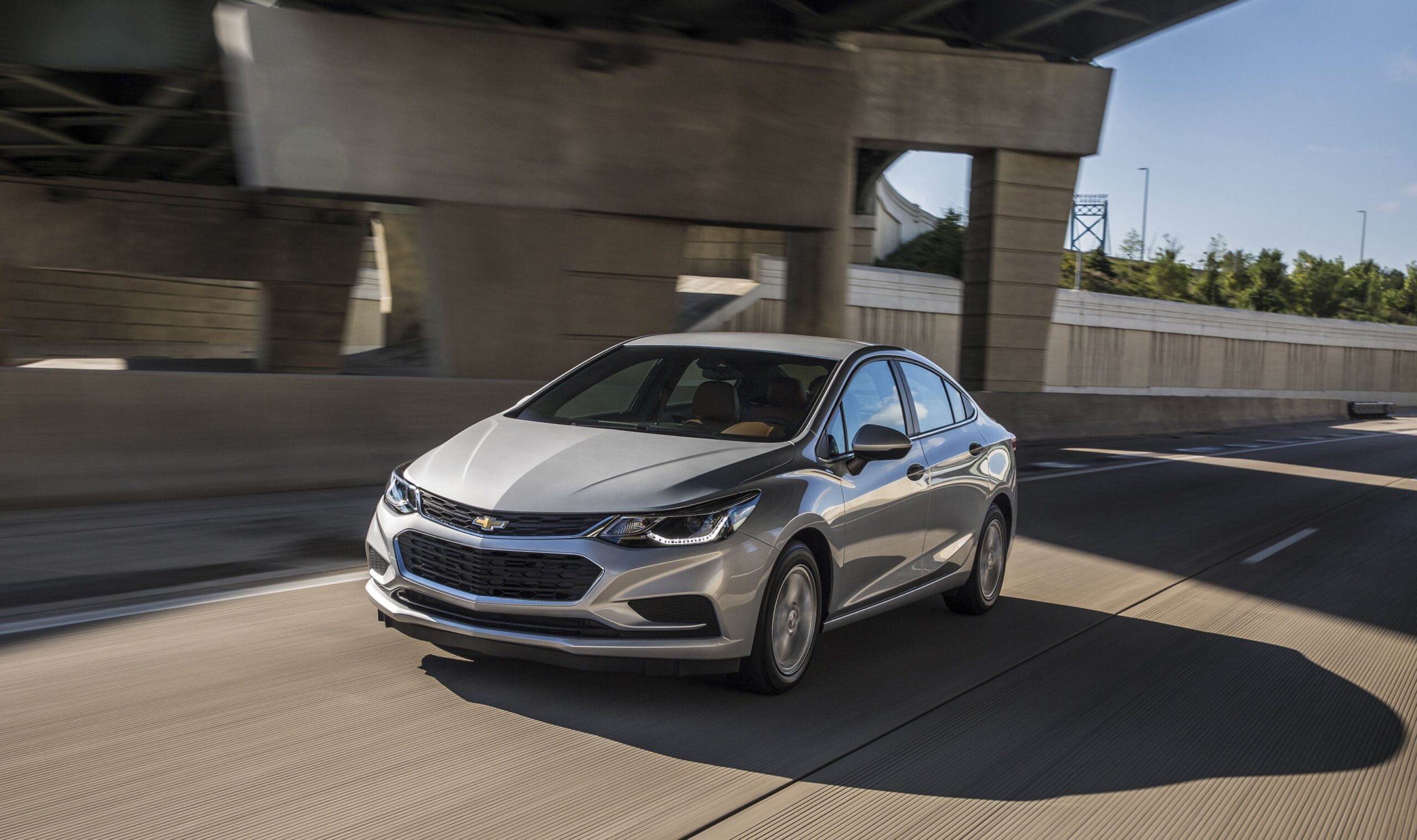
If we had to pick one model that proved General Motors knows how to make affordable cars well, it’d be the Chevrolet Cruze. Available as a compact sedan or hatchback, the Cruze possessed the refinement of a larger car. Chevrolet even changed things up with the Cruze TD, the successor to the first-generation model’s diesel-powered variant. Produced from 2017 to 2019, this variant continued the tradition of offering something out of the ordinary. However, as with the Equinox Diesel, several missteps resulted in its untimely demise.

Chevrolet Cruze TD: The Ultimate Daily Driver?
With the second-generation Cruze TD, Chevrolet had a nearly perfect compact commuter. RS and Premium models rode well over rough pavement, even with 18-inch alloy wheels, thanks to a Watts link rear suspension instead of a torsion beam. The Cruze TD also handled nicely. While not as sporty as the Mazda3 and Honda Civic of that era, it managed to stay surefooted and tossable when the road turns. Its steering, while well weighted and accurate, lacked the responsiveness of its competitors back then, resulting in more relaxed road manners. It’s best to think of the Cruze TD as a chill highway cruiser rather than a canyon carver.
The diesel engine option added a nice boost of torque, enhancing the overall driving experience. Like the Equinox, the Cruze TD was equipped with a 1.6-liter turbodiesel I-4 engine producing 137 hp and 240 lb-ft of torque. In this application, it felt livelier and more energetic, possessing plenty of power for highway passing and climbing steep grades. However, it did suffer from a bit of turbo lag, and excessive vibrations and clatter at initial start up.
As for the Cruze’s optional nine-speed automatic, it responded quickly. However, it hunted for gears a lot, consistently shifting up and down. The six-speed in the Equinox didn’t do this. Although it hesitated to downshift, the available torque gave you plenty on tap. For those who wanted full control, a six-speed manual was also offered.
Unsurprisingly, the Cruze TD’s efficiency impressed. The EPA rates the sedan at 30/52/37 mpg city/highway combined with the manual, or 31/47/37 mpg with the automatic. Meanwhile, the hatchback has a slightly lower EPA rating of 29/48/35 mpg with the stick or 30/45/35 mpg with the auto. In real-world driving, the Cruze TD easily matched or exceeded its EPA ratings.


A Looker Among Compact Cars
In both hatchback and sedan form, the Cruze looked GOOD. During the late 2010s, it ranked as one of the best-looking compacts available. A sleek profile that meshed well with Chevrolet’s corporate face of that era gave it a modern appearance. The RS trim had the sharpest styling with its 18-inch alloy wheels, cool rear diffuser with single exhaust tip, and on the hatchback, a large roof spoiler.
The interior was just as modern. Higher trims with their two-tone schemes, especially the caramel and black combo, brightened up the cabin. However, the build quality fell short. Although most surfaces had padding, excessive hard plastics and inconsistent panel gaps made the Cruze TD feel cheap. At least the interior remains reasonably quiet and has plenty of space for four adults and their gear in both body styles.
General Motors had one of the better infotainment systems in the late 2010s. The Cruze TD came with Apple CarPlay and Android Auto as standard, making it easy to stay connected. Meanwhile, the native MyLink interface came with a 7 or 8-inch touchscreen. Its simple menu structure made settings and functions easy to reach. Additionally, the nine-speaker Bose premium audio system sounded great, offering good clarity. On the other hand, the driver assistance features worked well and remained unobtrusive. Unfortunately, Chevy made them exclusive to higher trims.

No Chance to Shine
The Chevrolet Cruze, especially in TD guise, proved that GM can make excellent compact cars. From a roomy interior and user-friendly tech to excellent efficiency and smooth ride, it nailed its performance of intended function.
However, its pricing and value proposition fell short. A higher starting price than its competitors and certain features being exclusive to the most expensive variants made the Cruze less appealing. Together with the lack of interest in diesel-powered vehicles in the aftermath of Volkswagen’s Dieselgate scandal and weakening demand for traditional cars, the Cruze TD never had a chance to shine. As a result, GM discontinued it after 2019 along with the gas-powered model, marking the end of an era for compact cars at Chevrolet.