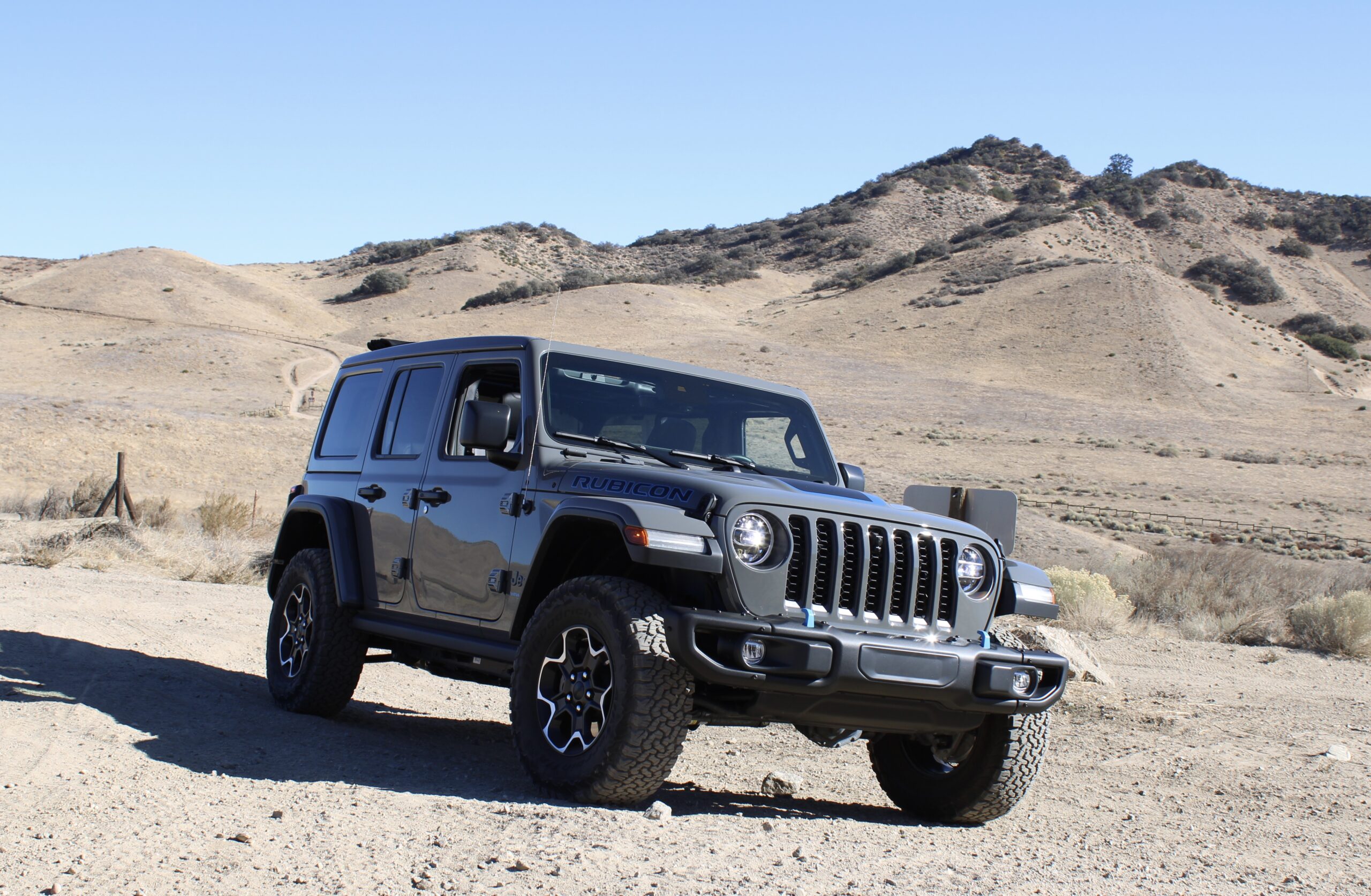
if there were one brand to make electrified off-roading a reality, it’d be Jeep. The brand’s strong off-road heritage made it the prime candidate, and boy, did it make a point. With the Wrangler 4xe, Jeep showed off the potential of an electrified powertrain on the trail. Featuring a plug-in hybrid powertrain, this rig gave you exceptional powertrain versatility while on adventures off the beaten path. However, its recent discontinuation came as a shock, especially considering its status as one of the best-selling plug-in hybrids in the U.S. With that said, let’s look back and discover what makes the Wrangler 4xe so good and why killing it off is a huge mistake.
Jeep Wrangler 4xe: Capable and Potent
Get the Wrangler 4xe off the pavement, and its Jeep DNA shone through. This easily conquered virtually every type of trail we threw at it. Oh, and we did all that in EV mode. Yup, we saved our 22-mile all-electric range for crawling up and down trails. It handled everything we asked of it without using the gas engine. Moreover, a button that activates max regenerative braking makes it even easier to crawl on a trail or drive around town, helping you drive more efficiently. The moment we transitioned to higher-speed, desert-running-style driving, the chassis took it all in stride. It did a great job taking on the rough stuff, keeping the SUV stable without throwing you around too much.
Once you’re ready to head home, the Wrangler 4xe kept things comfortable. Despite its solid front and rear axles, it rode quite well thanks to tires with plenty of sidewall. Quibbles? It felt like an old school body-on-frame SUV. At highway speeds, it suffered from tramlining, a phenomenon where the tires follow road imperfections, such as ruts and grooves. Additionally, slow steering and plenty of body roll made it hard to make emergency maneuvers confidently.
The Wrangler 4xe’s got great power, too. Its plug-in hybrid system couples a 2.0-liter turbo-four with an electric motor, a 17.2-kWh lithium-ion battery, and an eight-speed automatic transmission. Total output stands at 375 hp and 470 lb-ft of torque. As a result, it effortlessly moves this 2.5-ton SUV on and off the pavement. Its gearbox shifts smartly and allows you to make the most out of the available power. At 20 mpg across the board, according to the EPA, fuel economy wasn’t impressive. However, if you made extensive use of its EV mode, surpassing that number in real-world driving became a cinch.

Ruggedly Spacious
Jeep ensured that the Wrangler 4xe didn’t deviate much from the rest of the lineup. As a result, it looked identical to a standard Wrangler Unlimited. The only giveaways were blue exterior accents and a charge port. Otherwise, the 4xe was a Wrangler through and through, complete with goodies like removable doors, a folding windshield, and several options for removable side panels and roofs.
Inside, 4xe models kept the same utilitarian interior. It easily fits four adults and their gear. You even got split-folding rear seats for added versatility. However, like other Wrangler models, it lacked small-item storage. Additionally, part of the vehicle’s frame took up cabin space to allow for its removable components, reducing usable space even more. Moreover, the Wrangler 4xe suffered from excessive road and wind noise even when completely closed. You can drown it out with the available nine-speaker Alpine premium audio system, which sounds good. However, its subwoofer takes up cargo space, hurting practicality.
In terms of tech, the Wrangler 4xe was all about user-friendliness. Initially launching with UConnect 4 featuring an 8.4-inch touchscreen (as shown), it was later upgraded to UConnect 5 and a 12.3-inch display. Regardless of the variant, both interfaces had easy controls and a logical layout. Furthermore, wireless Apple CarPlay and Android Auto made it even simpler to use.
On the other hand, the Wrangler 4xe never got the full gamut of driver assistance features that other Jeep models got. However, the features it did offer worked well. Its well-tuned adaptive cruise control system took its heft size into account, slowing down early when it saw congested traffic ahead. Furthermore, its conservative programming reacted sooner than most systems, once again putting its bulky nature into consideration.


Wasted Efforts
The 4xe model was one of the brightest stars in the Jeep Wrangler lineup. Capable and versatile, it embodied the freedom of movement, electrified thanks to its plug-in hybrid powertrain. However, unfortunate circumstances led to its demise. Between an extensive list of recalls to the end of the federal EV tax credit, a poor reputation for reliability, and a high price tag, the Wrangler 4xe had everything stacked against it.
Like the Chrysler Pacifica PHEV, the Wrangler 4xe’s discontinuation is extremely short-sighted and will have lasting repercussions. Yes, it’s expensive with a price tag between $51,000 to over $70,000, but so is its closest competitor: the Toyota 4Runner Hybrid. Without the Wrangler 4xe, Stellantis cedes the electrified off-roader market to Toyota and Rivian. Until the Recon arrives (if that even happens), these brands are the closest alternatives to an electrified Wrangler.
With Toyota going full steam ahead on every type of electrified powertrain and Rivian expanding its lineup, Jeep’s about to fight an uphill battle. Both of Toyota and Rivian have strong brands, and both are dedicated to electrified mobility with or without any incentives. Jeep’s brand is strong, too, but it lacks the reputation for reliability and advanced technology that Toyota and Rivian have, respectively.
Keeping the Wrangler 4xe would’ve been the smarter move. Develop the plug-in hybrid powertrain and spread it to more vehicles, all while improving its durability through time. Unfortunately, with that variant gone alongside the other plug-in hybrids, Stellantis just shot itself in the foot…again. We hope that its upcoming EREV, hybrid, and all-electric powertrains somehow make up for this loss.