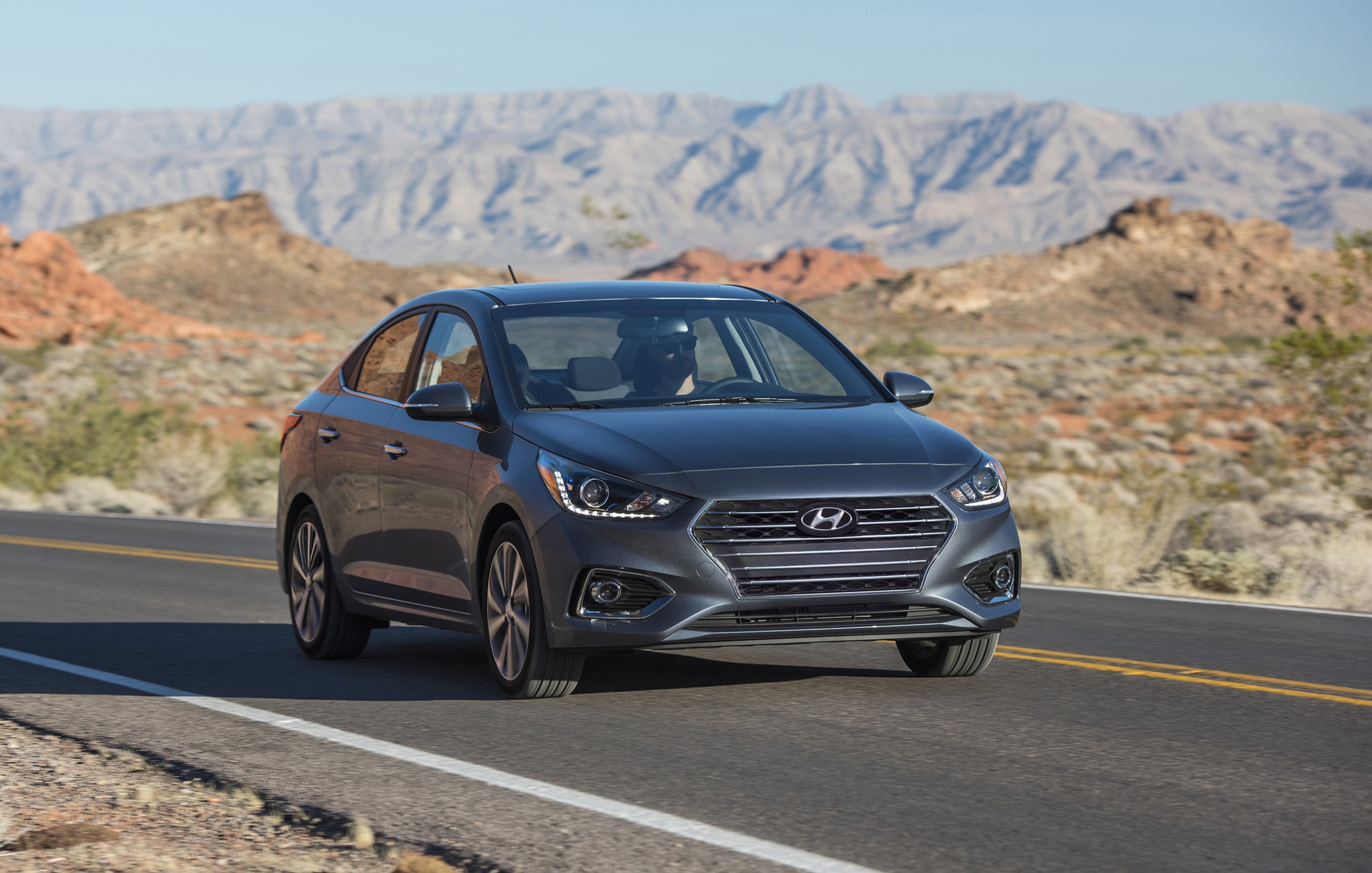
Hyundai made its name on value and made a name for itself later on with vehicles that punched above their weight. Its lineup stands out today through cutting-edge tech, eye-catching design, and exhilarating performance. To put it simply, Hyundai has something for everyone and overdelivers on every vehicle it sells. At the entry-level end, the Hyundai Accent gave you plenty more substance than most entries in the subcompact segment. This pint-sized sedan was proof that going small didn’t mean cheap and chintzy.

Hyundai Accent: City-Friendly Practicality
The Hyundai Accent exemplified the Korean automaker’s design prowess. It managed to successfully translate the design language from that generation’s Elantra and Sonata into a subcompact sedan. This small car still looks modern several years after its discontinuation. Unlike other recently discontinued subcompact sedans, the Accent managed to avoid looking awkward thanks to its clean lines and a tastefully clean appearance. Best of all, the range-topping Limited trim came with stylish LED daytime running lights and LED taillights, as well as a handy hands-free trunk for added convenience. Hyundai eventually added LED headlights to this trim, elevating its exterior design.
Stepping inside the Accent’s interior, you immediately see how much more substantial this car is. Comfortable room for four or five in a pinch, a surprisingly huge trunk, and 60/40 split-folding rear seats made it refreshingly versatile. It even has plenty of cubbies for small items like smartphones. Meanwhile, great build quality added to this feeling of solidity. Although it makes extensive use of hard plastics, the materials felt solid. Our only quibble? It could use a bit more sound deadening because the cabin lets in a good bit of road and tire noise.
On the tech front, the Accent had the basics down. A user-friendly seven-inch touchscreen and Apple CarPlay and Android Auto compatibility kept you connected. Most importantly, it had retained plenty of physical controls that helped add to its approachability. In terms of active safety, the Accent only came with front automatic emergency braking on certain trims.


Efficient and Comfortable
From one generation to the next, Hyundai vehicles make huge strides, and the Accent was no different. Powered by a 1.6-liter four-cylinder with 130 hp and 119 lb-ft of torque, this subcompact moved without drama. That means easy passing, merging, and cruising at highway speeds. The available six-speed automatic transmission worked well, too, willingly downshifting a gear or two to make full use of the engine’s available output.
Hyundai swapped to a new 1.6-liter engine for 2020, but its output was down to 120 hp and 115 lb-ft. However, it came paired to a newer, more efficient chain-driven CVT transmission, resulting in quicker acceleration. The Accent also impressed when it came to efficiency. Models with the six-speed auto from 2018 to 2019 had an EPA rating of 28/38/32 mpg city/highway/combined. Later on, models with the CVT raised the bar at 33/41/36 mpg, allowing you to go even farther on its tiny 11.9-gallon fuel tank.
The Accent continued to impress on the road with its noteworthy ride comfort. Despite its small footprint and a torsion beam rear suspension, this subcompact sedan does a great job isolating passengers from harsh imperfections and big impacts. Although it doesn’t exactly glide through them, the chassis did an admirable job at keeping you from bouncing all over the place on rough roads. Its handling, while far from sporty, added a secure feel when taking turns. Credit good body control for that because the stock tires and suspension aren’t exactly the sportiest. It also has Torque Vectoring Control, which subtly applies the brakes on the inner wheels during cornering for extra stability.
Hyundai Accent: The Subcompact Perfected?
The Accent proved that with strategic cost-cutting, it’s possible to create an excellent, inexpensive vehicle. Hyundai maximized the value proposition through good road manners and the right mix of tech, style, and affordability. As a result, the Korean automaker gave us a car that maxed out at around $20,000 and avoided feeling like a penalty box. It’s proof that entry-level cars don’t need to feel cheap just cause they’re basic transportation.