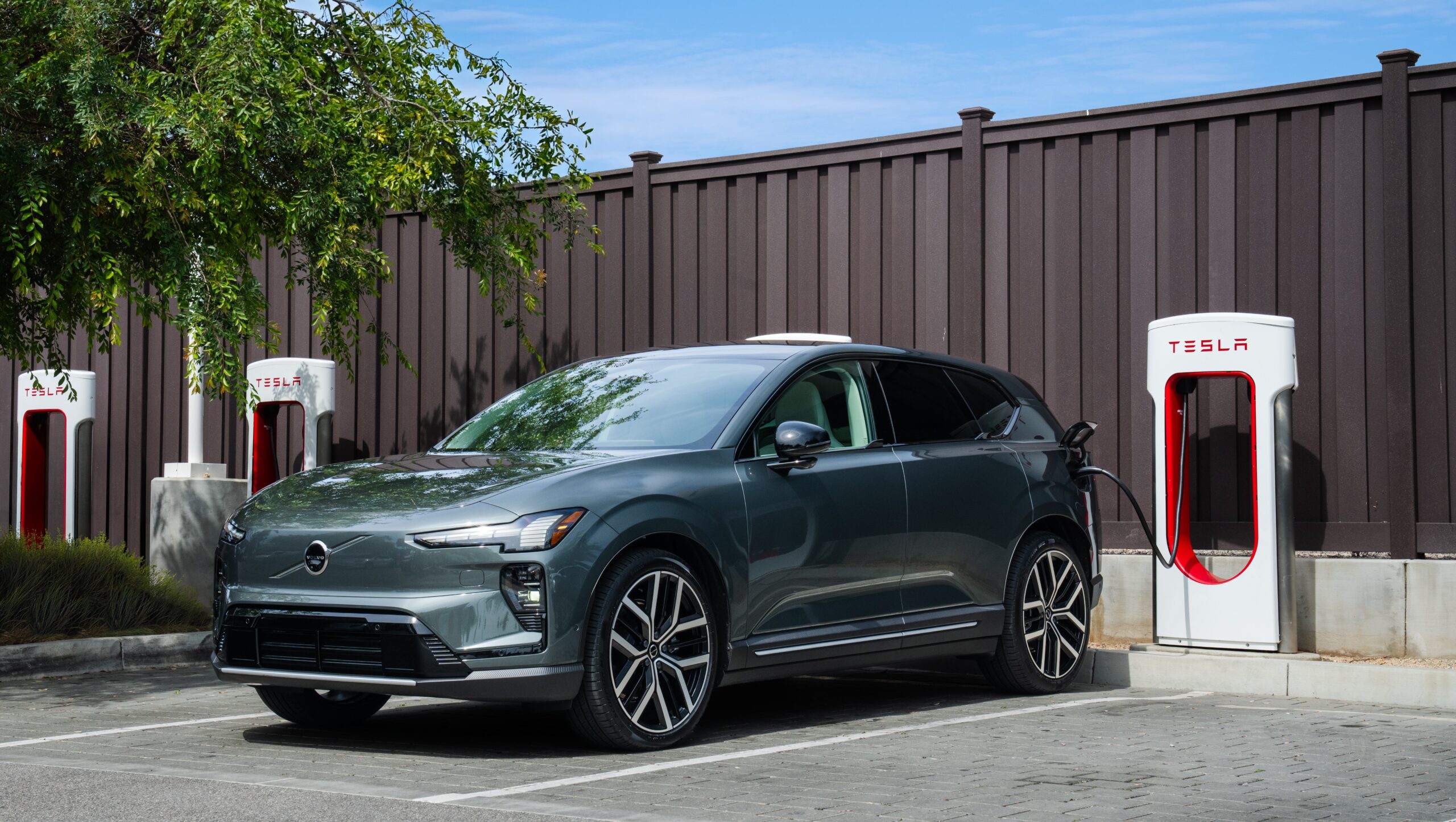
Volvo is synonymous with the wagon. It’s the body style most associated with the brand. Heck, the company even raced 850 wagons in the British Touring Car Championship, winning the series in 1998. For Volvo, the long-roofed body style, whether in standard or lifted cross country form, is their DNA. Unfortunately, the advent of SUVs changed that, resulting in fewer wagons in Volvo’s lineup. However, that may change in the near future, according to a report from Automotive News.
Citing a source familiar with the matter, Automotive News reports that Volvo is considering introducing two new midsize vehicles to the U.S.: a sedan and a wagon. The latter may even include a cross country variant. Volvo is currently developing both models for the European market and is slated to introduce them in the U.S. in 2028. That’s two years after the V60 Cross Country exits the U.S. market after the 2026 model year. Most importantly, both models are easily homologated for the U.S. market.
So, what platform are these models using? According to the report, they share the SPA3 architecture with the EX60. The next-generation EX40 will be the second SPA3 vehicle when it arrives next year. These sedan and wagon, likely called the ES60 and EV60, are the third and fourth respectively. Additionally, the Polestar 7 will also use SPA3. Like the EX60, expect those vehicles to all use HuginCore, Google Built-In, and all of Volvo’s latest technologies.

Is Volvo Filling the Polestar Gap With a Sedan and Wagon?
To put it simply, no. Development of the upcoming midsize all-electric Volvo sedan and wagon was well on the way before Polestar’s sudden exit from the U.S. So no, Volvo did not have a say in this decision. However, this opens a new opportunity to fill a void. Before Polestar became a standalone brand, Volvo had at least one sporty or performance car in its lineup. These include icons like the 240 Turbo, 850 T-5R, and the 740 Turbo, all of which are available as either a sedan or wagon.
In recent years, Volvo has continued to offer performance models. The most notable ones are the S60R and V70R, produced from 2004 to 2007. Later on, the C30, produced from 2007 to 2013, offered a retro-inspired take on a sporty hatch. The S60 and V60 later kept the sporty spirit, offering Polestar models. An S60 Polestar even set a Nurburgring lap record for production sedans in 2016! These eventually evolved into Volvo’s first electrified performance models in the T8 Polestar Engineered models. That line eventually expanded to a total of three models: S60, V60, and XC60. These were on sale in the U.S. alongside the Polestar 2, 3, and 4. In fact, the XC60 T8 Polestar Engineered is still available today!
With Polestar leaving a performance car void, this may be the right time for Volvo to bring back sporty models in its lineup. No, this should not just be an EV with insane straight-line acceleration like the EX30 dual-motor. This must be a well-rounded performance car, just like the three vehicles Polestar sold here. These must have the smooth, sophisticated driving dynamics that epitomized Volvo’s past performance cars, while maintaining their refined Scandinavian take on luxury.
ES60 and EV60 Inbound?
The news of Volvo bringing back a sedan and wagon to its lineup makes us happy. Being Polestar owners, we’d love our cars to have that Scandinavian premium flair and timeless design. Most importantly, it broadens the brand’s lineup by adding two models that slot right in the sweet spot. We expect the ES60 and EV60 to appeal more to a less conventional consumer, ones that don’t like the idea of SUVs. The latter, in particular, is aimed directly at enthusiasts. We’re excited to learn more and see what Volvo has up its sleeve as it expands its EV offerings.

One thought on “Is the Volvo Wagon Returning to the U.S.?”
Comments are closed.