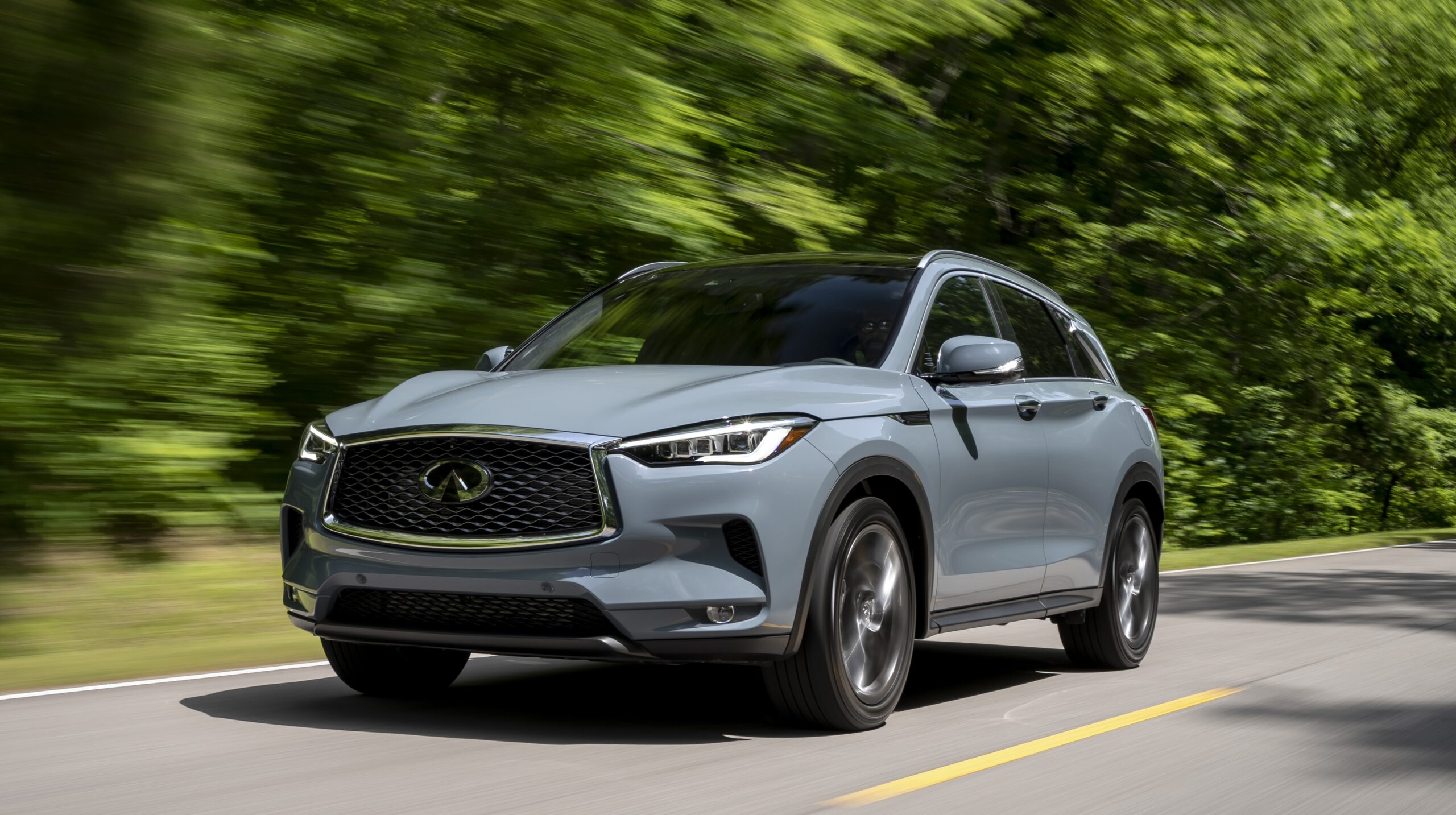
Japanese BMW. Those words once described Infiniti with its lineup of incredible luxury cars. These included the legendary FX, as well as the iconic G35 and G37, both of which were available in either coupe or sedan form, and later, a convertible. It also included the EX, which later became the Infiniti QX50. Essentially a lifted G35/G37 wagon, the first-generation QX50 blended versatility with sports sedan handling. Unfortunately, that greatness didn’t continue with the second generation, and no, it’s not because it became FWD-based.
The QX50 fell from grace due to several factors. It made plenty of promises, but never lived up to most of them. Additionally, this luxury SUV slotted into one of the most competitive classes in the industry: the compact segment. Furthermore, politics and cost-cutting also played a role, the former of which led to its demise. With that said, let’s explore this SUV. During my early days as an auto journalist, the Infiniti QX50 and I had a love-hate relationship, and I’ll explain why.

Infiniti QX50: Timelessly Gorgeous
Design was always one of Infiniti’s strengths. The second-generation QX50 exemplified this with its flowing lines, curvaceous profile, and distinctly Japanese flair. It truly looked like a proper luxury SUV that could only come from Japan. Most importantly, it kept its timelessness, looking fresh even after nearly a decade on sale.
The same design theme continued inside the cabin. On higher trims, it combined tasteful wood trim with quilted semi-aniline leather seats, and multi-tone colors that pop. Later on, the Sport trim added a touch of attitude with available Monaco Red two-tone leather interior. Finally, the aluminum trim elevated its youthful feel. Plus, spacious seating for four and a reasonably-sized cargo area made the QX50 surprisingly practical.
Where things fall apart is the integration of technology. Infiniti’s dual touchscreen layout felt cumbersome to use, especially in early models without Apple CarPlay and Android Auto compatibility. Moreover, the menu structure looked dated due to its grainy graphics. At least the 12-speaker Bose premium audio system sounded crisp and fitting of a luxury car.
Meanwhile, the driver assistance tech worked without getting overly intrusive or nanny-like. The QX50 was also one of the first Nissan and Infiniti models to feature ProPilot Assist, which worked incredibly well and has since received many improvements. It does a great job dealing with heavy traffic and keeping you centered when the road opens up. Most importantly, it does a great job at taking gentle turns and making sure you stay in control.

Powertrain Disagreements
Behind the wheel, the QX50 drives…odd. How so? Blame the powertrain. It featured the 2.0-liter VC-Turbo engine with 268 hp and 280 lb-ft of torque paired to a CVT. This combination lacked the refinement expected out of a luxury SUV. The engine’s ability to vary its compression ratio allows it to operate efficiently or emphasize power. However, it’s never on the same page with the CVT. As a result, the powertrain surged a lot and never felt even with its power delivery. In some instances, it amplified turbo lag when you put your foot down. Other times, the CVT wants to get the most power, but it couldn’t because the engine had to change to a lower compression ratio and spool up the turbo.
The QX50 wins back points when it comes to ride and handling. Even with 20-inch wheels, it remained surprisingly comfortable over broken pavement and had a smooth ride. Additionally, the QX50 took turns nicely, resulting in a surefooted handling. Meanwhile, the AWD system also did a great job managing traction, adding to the QX50’s stability. Unfortunately, the steering felt disconnected and didn’t quite synergize with the chassis.
An Unfortunate End
For Infiniti, the QX50 represented a fresh start. A product poised to bring volume and turn its fortunes around. However, that’s not what happened. The QX50 ended up becoming just another entry in the crowded luxury compact SUV segment. A vehicle lost in a sea of strong products. Its lack of powertrain refinement and poorly integrated infotainment technologies made it even a tougher buy.
Furthermore, the QX50’s complex powertrain failed deliver on its promise of efficiency and power at once. Yes, it has plenty of get up and go…when the engine and transmission eventually get on the same page. Unfortunately, the SUV never matched its EPA-estimated ratings of 23/29/26 mpg city/highway/combined rating with FWD or 22/28/25 mpg with AWD. In fact, during the multiple weeks I spent with the QX50, it barely averaged 20 mpg.
So yes, the QX50 had promise. However, it failed to live up to it. In a segment packed with so many strong entries, automakers can’t afford to mess up. Sadly, Infiniti messed up with its complicated powertrain and dated tech.