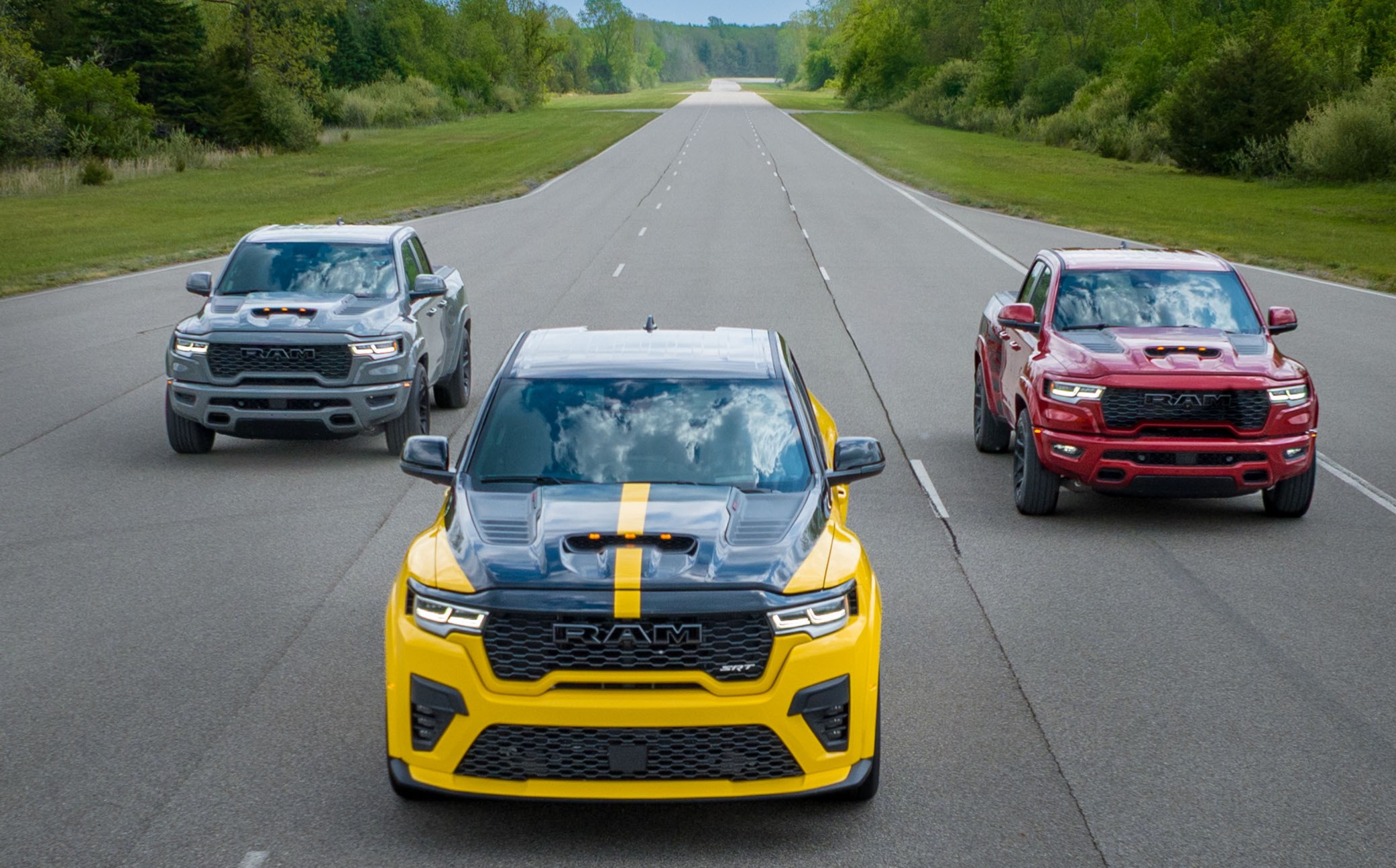
Stellantis has announced its FaSTLane 2030 initiative, which aims to introduce more than 60 new and 50 refreshed models between now and 2030. This includes 29 battery-electric vehicles, 15 plug-in hybrids or extended-range electric vehicles, 24 hybrids, and 39 gas or mild hybrid models. This new approach also emphasizes four brands for profitability: Jeep, Ram, Peugeot, and Fiat. Chrysler, Dodge, Citroen, Opel, and Alfa Romeo remain as key regional players. Meanwhile, DS and Lancia continue to play prominent roles in their home markets of France and Italy, respectively. Citroen will manage DS, while Fiat handles Lancia. As for Maserati, it remains a pure luxury brand with two new models in the pipeline. More details on those will be revealed in December 2026.
The FaSTLAne 2030 plan emphasizes the use of modular platforms to drive efficiency and competitiveness. By 2030, 50 percent of global annual volumes will be produced on three global platforms, including the new STLA One. That was designed to maximize commonality. Stellantis will also make full use of its upcoming tech suite, STLA Brain, SmartCockpit, and AutoDrive. Additionally, it intends to collaborate with first-tier partners on developing new technologies. These include Leapmotor, Dongfeng Tata, and Jaguar Land Rover. The company also aims to collaborate with companies such as Qualcomm, NVIDIA, and CATL on software, driver-assistance features, and AI.
As part of its new strategy, Stellantis aims to cut development cycles from 40 months to 24 months, while improving quality and cost competitiveness. AI will be used to help with this transformation.
Stellantis: Region-Specific Product Strategies
In terms of the product strategy, each region will differ. North America will see an improved production capacity utilization of up to 80 percent by 2030. On the other hand, Europe will be reduced by over 800,000 units, and plants will be repurposed or leveraged for partnerships. This allows utilization to increase from 60 to 80 percent in 2030.
As for the product launch, North America will expand by 50 percent thanks to the addition of 11 new vehicles. Seven of those cost under $40,000, while two are less than $30,000. Meanwhile, Europe aims to refocus each brand’s portfolio for greater differentiation and expanded coverage. This includes a new electric city car made in Italy.
Source: Stellantis