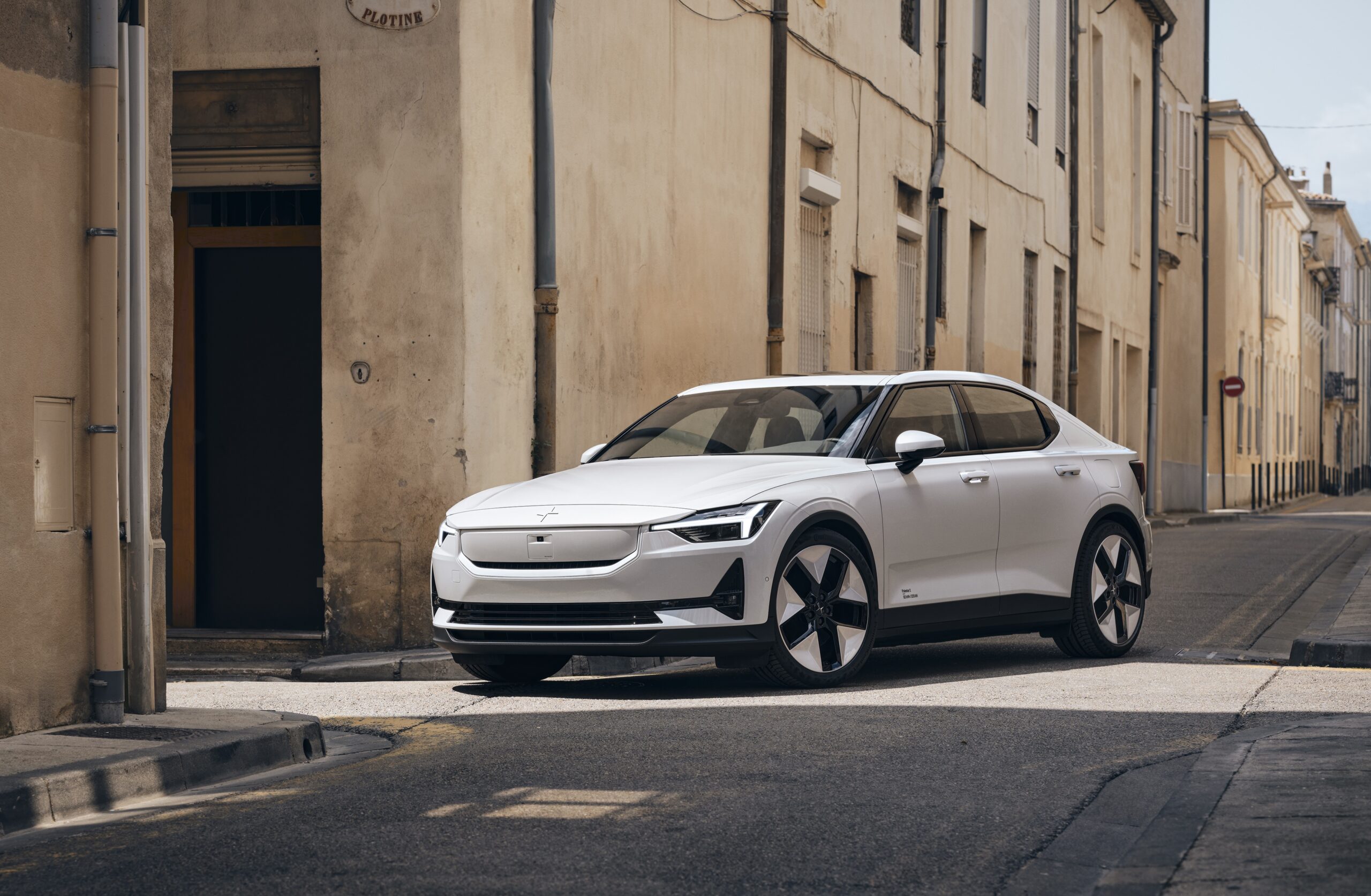
Last month, I wrote a piece outlining what we know about the 2027/2028 Polestar 2. The second generation of the Swedish brand’s compact sports sedan sheds its lifted look for a more conventional look. Low slung and sportier than ever, complete with an updated iteration of the dual-blade headlights. Polestar executives have also revealed that it retains the three-box design, meaning it has likely morphed into a conventional sedan with a trunk.
On the other hand, we don’t know much about the mechanical components or the platform it’s on. In the previous piece, I project that the 2 will move to an 800-volt electrical system, just like the Polestar 3 did. That makes sense, as the other entry-level model, the upcoming Polestar 7, will have it because it uses Volvo’s SPA3 platform. Currently, only the EX60 uses that. The next EX40 and the 7 are next in line to move to that architecture. However, the possibility of retaining the 400-volt system remains. Why? Several factors, including costs and compatibility with the charging infrastructure. Allow me to expand on this.

2028 Polestar 2: The Entry Point
In the lineup, the 2 serves as the introduction to the Polestar brand. The one designed to attract new owners by showcasing the best of Polestar without the high price tag. It’s a tough mission, for sure, especially when vehicles like the Tesla Model 3 and BMW 3 Series exist. Plus, the vehicle must effectively balance performance, luxury, and technology while retaining an entry-level price tag, making the 2’s job even harder.
This is where a 400-volt electrical system comes in. It’s cheaper to integrate in most vehicles because it’s a proven setup. Most importantly, this is the more cost-effective route. Going 800 volts future-proofs the vehicle, improves efficiency, and allows automakers to use lighter wiring to cut weight. However, this setup increases costs. A 400-volt system won’t cost as much, minimizing the overall cost of the vehicle.
In most cases, a 400-volt setup works quite well and is more than enough. Several vehicles that have this even DC charge relatively quickly with high peak rates! The Rivian R2, the Toyobaru EV family, and more. Heck, even the facelifted 2024 to 2027 Polestar 2 built have a high peak DC charging rate of 205 kW! These vehicles prove that 400-volt electrical systems can work when done properly. Additionally, they aren’t limited when DC charging at stations that can’t accommodate 800-volt vehicles. They’re able to get the most out of every session, while some higher-voltage cars are capped out.
The Right Solution?
Now that I’ve put down my reasoning to stick with a 400-volt setup in the 2028 Polestar 2, we now have one more question? Is this the right move? Unfortunately, it depends on many factors. Keeping it 400 volts may minimize costs, but is it significant enough to justify against the benefits of an 800-volt setup? Will it be competitive with the rest of the segment? Can it meet or exceed performance expectations?
Yes, the current-generation Polestar 2, equipped with an 82-kWh battery, has proven the viability of a 400-volt system. However, the 2026/2027 Polestar 3 just moved to an 800-volt configuration and has identical driving range ratings to the 2025 car with 400-volt electrical components. The catch? It does so while using a battery with less usable energy capacity. Once again, it’s a matter of balancing everything.
Where do I stand with this? I still suspect the second-generation Polestar 2 will move to an 800-volt system. The 400-volt configuration makes sense, but Volvo and Polestar have started moving to the more sophisticated setup. The parts for both exist, but the Swedes are making more use of the higher-powered stuff.
One thing’s for sure, though. No matter which system comes on the new 2, it must come to North America. With skyrocketing gas prices, people are snapping up certified pre-owned 2s at a rapid pace. Most importantly, the 2 is synonymous with Polestar. It IS the brand. Bringing the second-generation car to this side of the Atlantic adds another option to the EV sedan segment. Additionally, it gives Polestar a product that’s both aspirational and more attainable. You can bet I’d be the first in line for a 2028 2 here in North America. That’s a given.