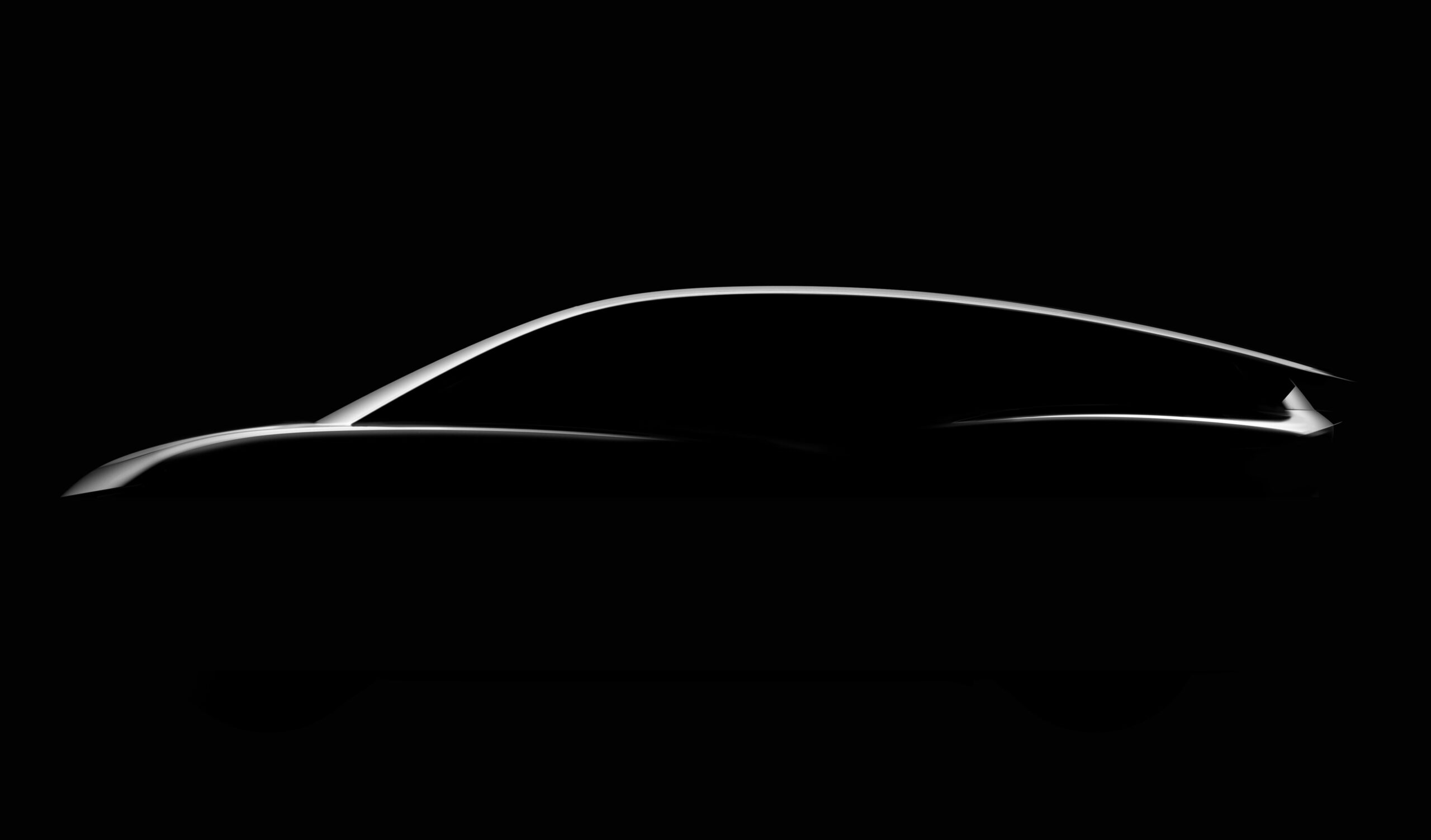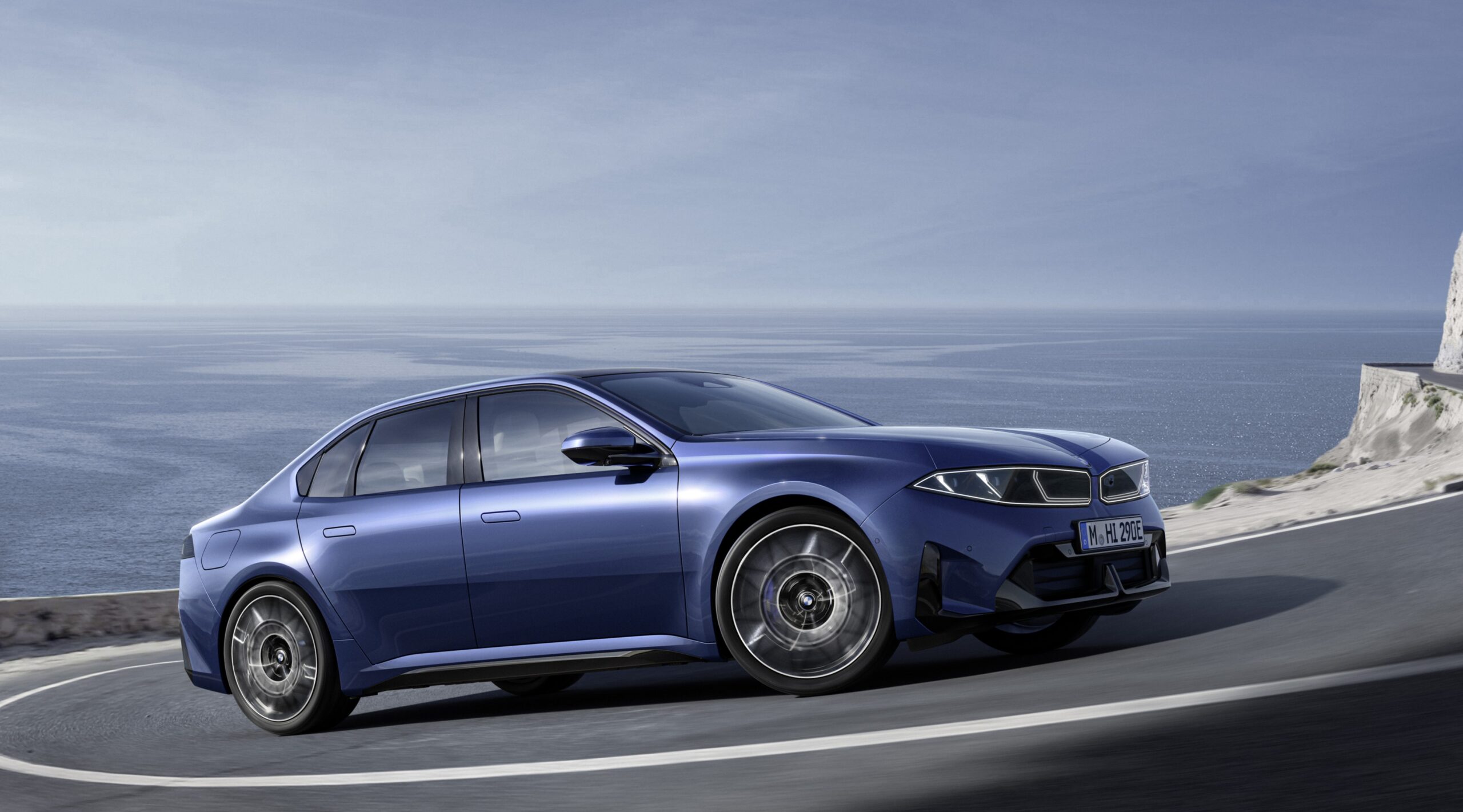
BMW has officially taken the wraps off the 2027 i3, the second vehicle in the Neue Klass family. Just like iX3, this battery-electric sedan retains many of the design details from the concept car it’s based on. It features a long wheelbase and a 2.5-box design, giving it that cool retro-modern look. The front fascia combines the traditional kidney grille, which has turned into a light signature, with the headlights. As a result, the i3 presents a new interpretation of BMW’s iconic four-eyed face through lighting, complete with welcome and goodbye animations. Meanwhile, the logo now sits on the hood, just like in classic BMWs.
Out back, the 2027 BMW i3 features athletic shoulders and flared wheel arches. This emphasizes its broad stance and width, hinting at its sporting intentions. At launch, the i3 has eleven exterior color options, including the new M Le Castellet Blue Metallic. Solid, frozen (matte), and metallic finishes will be available. For a sportier look, the M Sport package adds the M Aerodynamic package, a sport steering wheel, and optional blue M Sport brake calipers.

2027 BMW i3: A Future-Forward Interior
Like the iX3, the i3 sports the latest interior design language for the Neue Klasse models. It features the same 17.9-inch Free-Cut Design center display complemented by the Panoramic Vision digital gauge cluster and an optional 3D head-up display. For added comfort, the i3 offers a multi-function front seat option or M Sport seats for those who want something with more bolstering. In terms of upholstery options, Veganza and leather are offered, with the latter including an available BMW Individual version finished in exclusive black Merino leather.
On the tech front, the i3 features the latest BMW Panoramic iDrive display housing BMW Operating System X. It also features the same four superbrain high-performance computers as the iX3. This includes the Heart of Joy, which manages the driving dynamics of the vehicle. The other computers handle automated driving and parking, infotainment, and comfort-oriented functions like vehicle access and climate controls. This layout helps reduce complexity by allowing for the use of shorter and thinner cables to save weight and cut energy consumption to improve overall vehicle efficiency.
The new UI offers extensive customizability and has seven different profile options via the BMW ID. The Intelligent Personal Assist also comes standard on the i3. This time, it now includes Amazon’s Alexa+ AI technology, adding even more functionality. Meanwhile, BMW Digital Key Plus turns smart devices, including smartphones and smart watches, into the i3’s key. You can also share the digital key with others through a messaging app, all while defining the roles and rights of a specific user. The digital key also provides extra functions, including remote trunk operation. Additionally, the i3 benefits from over-the-air software updates, allowing it to improve over time.


Ultimate (Electric) Driving Machine
BMW says the i3 retains the hallmark high driving dynamics expected of a model in the 3 Series family. This time, it comes paired with long-distance comfort. The i3 takes advantage of its EV-specific architecture and a new flat high-voltage drive battery that lowers the center of gravity. Stroke-dependent shocks come standard, complementing the two-joint spring strut front and five-link rear axles. The front and rear anti-roll bars feature preloaded bearings for sharper handling. Additionally, the Adaptive M Suspension is available for those in search of a sportier drive.
The automaker also touts the smoothest braking in its history. BMW says precise electric motor control allows the i3 to slow down without any jerkiness or braking noise through its new Soft-Stop feature. As a result, regenerative braking takes over almost all braking operations in daily driving. That means the car only uses its mechanical brakes for emergency stops or sporty driving.
Additionally, improvements to the Level 2+ driver assistance tech mean seamless interactions between the assistance and driver inputs. BMW says the driver remains involved at all times, enabling better interaction with the systems without causing any deactivations. The i3 comes standard with Driving Assistant Plus, which functions like an advanced adaptive cruise control with lane-centering. It can also recognize posted speed limits and adjust the vehicle’s speed before curves, turns, or roundabouts.

Long Range and Fast Charging
The i3 uses BMW’s sixth-generation eDrive technology. It features a new 800-volt high-voltage battery that offers significantly longer driving range, peak DC charging rates of 400 kW under ideal conditions, and bi-directional charging functionality. Versus the outgoing setup, Gen6 increases driving range by 30 percent thanks to new cylindrical cells. Compared to the outgoing prismatic cells, these new ones have a 20-percent increase in volumetric energy density. As a result, the i3 has an impressive projected driving range of 440 miles! Charging speeds are also 30 percent faster than before.
A cell-to-pack design means the cells are directly integrated into the battery without modular construction or structural elements. This enables high energy densities at a pack level while saving weight cost. A pack-to-open body concept allows for the battery’s flat design and turns its housing into a structural component. That means installing the battery closes the chassis’s open floor, allowing it to turn into the car’s underbody. This saves weight and allows for i3’s aerodynamically efficient design, all while improving torsional rigidity for better road manners. Finally, the Energy Master handles all energy flow, ensuring intelligent, efficient, and safe operation.
At launch, the i3 will be available in the 50 xDrive model with dual-motor AWD. Total system output checks in at 463 hp and 476 lb-ft of torque. BMW designed the rear electrically excited synchronous motor specifically for use with the i3’s 800-volt architecture. Meanwhile, the front asynchronous motor features a compact and lightweight design made of only iron and aluminum. Together, the cut energy losses by 40 percent, reduce the drive system weight by 10 percent, and drop manufacturing costs by 20 percent.

2027 BMW i3: More Than a Car
The i3 goes beyond just being a car. Its bi-directional charging capability means owners can use it as a power source. Vehicle-to-Load (V2L) capability allows the car to charge appliances and even e-bikes at up to 3.7 kW. Meanwhile, vehicle-to-home (V2H) enables the i3 to serve as your home energy storage system, providing power during outages through a photovoltaic system and the BMW Wallbox Professional. Lastly, vehicle-to-grid (V2G) allows the i3 to feed energy into the power grid.
BMW also emphasized charging convenience with the i3. The car features route planning optimized for charging with the help of standard battery preconditioning. Additionally, it features Plug & Charge for seamless authentication at public charging stations. BMW Maps navigation uses AI to learn from past charging sessions, allowing the infotainment system to figure out which stations are prone to faults and provide optimal charging station stops on your route.
When it arrives in the U.S. later this year, the i3 will come standard with a native NACS charging port. That gives i3 owners access to the extensive Tesla Supercharger network. Furthermore, the car will include a standard CCS adapter for access to other charging networks.
Sustainability at the Forefront
Both the 2027 BMW i3 and iX3 emphasize sustainability. BMW took a holistic approach that focuses on decarbonization along the entire vehicle’s life cycle, from product development to supply chain, production, and use phases. Renewable energy, increased use of secondary materials, and product and process innovations contribute to the significant emissions drop in the supply chain.
Recycled materials also play a key role. The front bumper uses 30 percent recycled plastic in the trim. The material variety has also been reduced from 15 to seven. As a result, the proportion of recyclable plastics used increases to 85 percent from 46 percent in the outgoing 3 Series. In total, the i3 consists of 30 percent secondary materials.
Certain components make up between 70 and 80 percent secondary aluminum. Even the housing for the Gen6 electric motor is 2/3 recycled aluminum, while the drive battery uses secondary cobalt, lithium, and nickel. Inside the cabin, the textile on the headliner consists of 100 percent recycled material. Even the frunk cover is made of 30 percent recycled marine plastic!
Production of the 2027 i3 begins in August of this year at the BMW Group plant in Munich, Germany. Expect the i3 to arrive in North America at the end of 2026.
Source: BMW