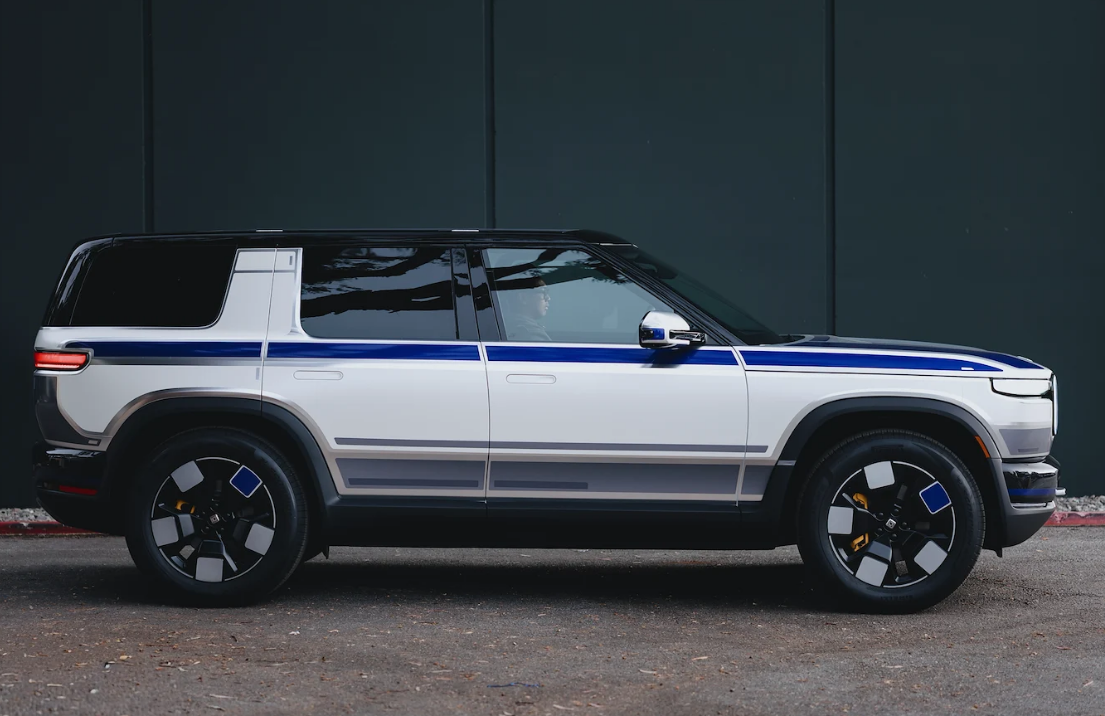
Rivian AI Day showcased a lot. From its proprietary, purpose-built silicon to its autonomy roadmap and software architecture underpinned by AI, there’s a lot to unpack.
Let’s start with the Rivian Autonomy Processory and Gen 3 Autonomy Computer. These form the core of the brand’s technology roadmap, delivering advanced levels of efficiency, performance, and Automotive Safety Integrity Level compliance. The first-generation Rivian Autonomy Processor (RAP1) powers the third-generation Autonomy computer and the Autonomy Compute Module 3. It has the processing power of five billion pixels per second. Plus, it includes RivLink, a low-latency interconnect technology that connects chips to multiply processing power. Additionally, RAP1 features an in-house-developed AI compiler and platform software.
Rivian also intended to integrate LiDAR into the upcoming R2. The system augments its multi-modal sensor strategy, providing detailed 3D spatial data and redundant sensing. This allows for improved real-time detection for edge-case driving scenarios. The setup is currently undergoing validation and is expected to ship on the R2 at the end of 2026.

Rivian Autonomy Platform + AI Assistant
Software-first defines Rivian’s autonomy approach. Powered by the Rivian Autonomy Platform, the automaker uses its Large Driving Model (LDM) to teach vehicles superior driving strategies using massive amounts of data. The fruits of this will first appear via software improvements to the second-generation R1S and R1T in the near future. Called Universal Hands-Free, this driver assistance feature allows for extended hands-free driving to more places. The feature will be usable on over 3.5 million highway miles across the U.S. and Canada, provided they are clearly marked, that is.
Additionally, Rivian announced Autonomy+, which includes features with the potential to make roads safer. Prices start at $49.99 per month, or if you’d like to pay for it all at once, $2,500. The driver assistance tech on the second-generation R1S and R1T, as well as in the upcoming R2, will continue to evolve and improve. Eventually, they’ll lead to point-to-point eyes off and personal level 4 autonomous driving.
Outside of autonomous and driver assistance tech, Rivian is also applying AI to the multimedia experience with Rivian Unified Intelligence. The big addition is Rivian Assistant, a new voice interface launching in 2026 on the R1S and R1T. The automaker designed this tech to understand your vehicle, your digital life, and everything around you. It also connects to third-party apps using an in-house agentic framework and will feature Google Calendar as its first integration. Additionally, it can understand natural conversation and help with service diagnostics when issues arise. The Rivian will also add AI support to its mobile app to improve self-service diagnostics on its vehicles. Learn more here.
Source: Rivian