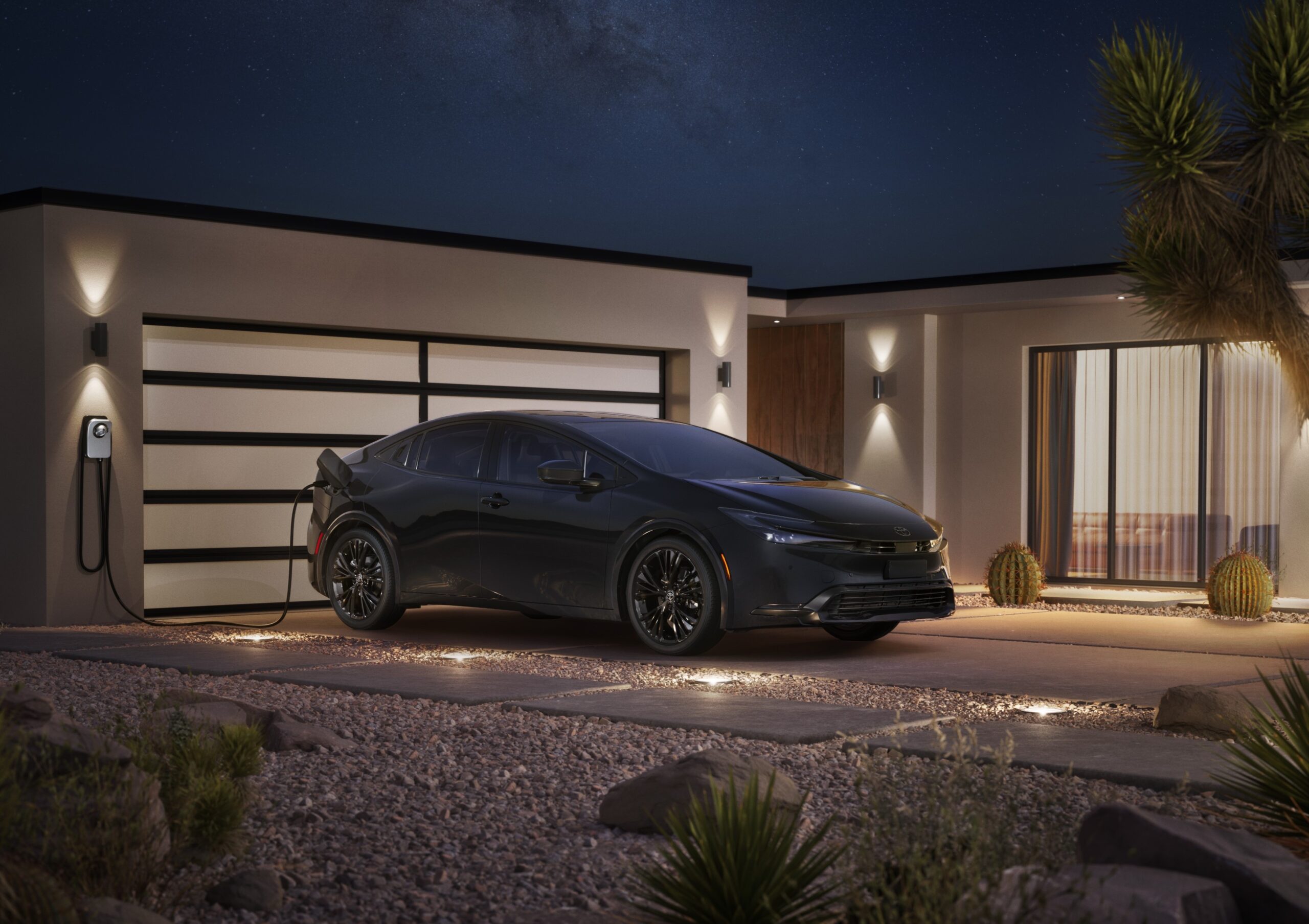
Pioneer. Game changer. Cutting-edge. These described the Toyota Prius when it first arrived in the late 90s to early 2000s. Its hybrid systems proved their viability for mass production, paving the way for electrified powertrains. These days, the Prius seems to have lost its relevance. With Toyota offering a hybrid powertrain as standard or an option in virtually every vehicle it sells, the iconic compact is now lost in the shuffle. Additionally, the advent of battery-electric vehicles took the Prius further out of the conversation.
Low sales numbers show that the Prius’ time may be up. With hybrid powertrains normalized, this might result in the end of this iconic model. However, this also represents an opportunity for Toyota to allow the Prius to evolve into its next iteration: an EV. The Prius stood for innovation when it came out and continued to do so until recently, when its electrified powertrain no longer became a key highlight. Turning it into an EV makes the most sense as the next evolution of the Prius, especially since Toyota considers it a halo product.
Let us explain why.

Toyota Prius EV: The Ideal Components Are Here
Although Toyota arrived fashionably late to the EV party with the middling bZ4X, it only took it three years to make up for lost time. Beyond standardizing the NACS or Tesla-style charging port, its current EV lineup, which includes the renamed bZ, is now among the most compelling. An emphasis on efficiency means they don’t need massive batteries to go long distances, resulting in a lighter vehicle. The Prius can benefit from these generational-level upgrades, especially now that the sedan segment has shrunk.
At the moment, you only have a handful of options in the electric sedan class. These include the Tesla Model 3 and the Lexus ES, the latter of which uses the latest evolution of Toyota’s BEV platform. Only the Model 3 now resides in the mainstream space, following Hyundai’s discontinuation of the Ioniq 6 in the U.S., while the rest all have a luxury badge. What’s more, the Tesla remains the only true mainstream compact EV sedan. This represents an opportunity for Toyota to build an all-electric Prius based on the upgraded e-TNGA platform. It moves the nameplate forward, all while filling a space that needs more competition.
With the upgraded EV lineup and enhanced components, Toyota moved to the head of the pack. The bZ, bZ Woodland, C-HR, Lexus RZ, and their respective Subaru counterparts manage to have a competitive driving range while using a 74.7-kWh battery. That’s smaller than what the competitors use, yet they offer similar output and driving range. Even the larger Highlander and Subaru Getaway, and the sporty Lexus RZ 550e F Sport use smaller batteries. Yet they manage to achieve a similar range as their competitors, or offer more power to boot. Together with new super-efficient electric motors, Toyota now has the necessary components for a proper all-electric Prius.

Building on the New Image
A Prius EV brings plenty to the table. In addition to continuing to serve as a halo for Toyota’s electrified lineup, it builds on the current model. How so? Converting the Prius into an EV enables Toyota to more effectively showcase the coexistence of efficiency and performance. The latest electric motors and batteries highlight this quite well. Efficient? Check. Powerful? Hell yes, they are.
Toyota’s latest EV powertrains, which it co-developed with Subaru, have the right mix of performance and efficiency to reimagine the Prius for a new generation. Its single-motor setup has 221 hp with the larger 74.7-kWh battery, giving it a strong base. That’s right in line with the Prius Plug-in Hybrid, only this time it delivers the power instantly. What about the dual motor AWD configuration? Anywhere between 338 and 420 hp, depending on the vehicle. Most importantly, these motors are super efficient, allowing the vehicles they power to go farther on a single charge.
In addition, Toyota also has another key advantage with its EVs: a surprisingly low curb weight. The heaviest EVs in the Japanese brand’s lineup barely crack 4,500 pounds, putting it on the lighter end of the spectrum. Some of the competitors weigh closer to 5,000 pounds, if not more (ahem, Honda Prologue and Chevrolet Equinox EV). This helps improve efficiency because it requires less energy to move the vehicle. A Prius EV would be among the lighter cars on this platform, which could give it well over 300 miles of driving range on both FWD and AWD configurations.
Solving a Big Issue
The current Prius traded the outgoing model’s versatility for ultra-modern and sporty styling. You know how Toyota could have both in a Prius? By turning it into an EV! The latest evolution of the e-TNGA and TNGA-K platforms is designed for EVs. Most importantly, the vehicles on these two architectures have superior interior packaging, something that the current Prius falls short on.
Without an internal combustion engine and its related components, an all-electric Prius can have it all: sleek styling and hatchback versatility. An EV platform enables this, all while giving the car the requisite performance and efficiency. In other words, turning the Prius into an EV solves a lot of the quibbles of the current car. The packaging benefits of an all-electric platform allow the car to have futuristic looks without giving up practicality.
Toyota’s latest EVs also show that ditching gas doesn’t have to cost an arm and a leg. Two of its existing EVs start under $40,000, and an all-electric Prius could also have variants in that price range. Even at the top end, none of Toyota’s EVs cost over $50,000 fully loaded with just factory-installed options and packages.
It doesn’t mean slow charging either, because all three models on sale have an 11-kW onboard charger and can DC charge from 10 to 80 percent in 30 minutes under ideal conditions. Sticking to a 400-volt electrical architecture and a modest 150-kW peak DC charging rate keeps complexity and costs down while retaining respectable charging speeds. So yes, it’s totally fine to not have an 800-volt charging architecture when you do a 400-volt setup properly.

Toyota Prius EV: Make It Now
With Toyota now the number two EV seller behind Tesla in the first quarter of 2026, the time for a Prius EV is now. It features an architecture and a lineup of highly efficient electric motor configurations that can make this a reality. Thanks to the C-HR, we know the e-TNGA platform can support cars smaller than the bZ. Let’s be honest, too; Toyota simply needs to take the C-HR and lower it to sedan height, changing the shell from a coupe-like small SUV to a sleek hatchback.
The use of existing components also helps cut costs. It’s not a bad thing considering how improved Toyota’s latest EVs are. In a low-slung hatchback with the same dimensions as the C-HR, Toyota may have a legitimate Model 3 killer on its hands. It likely has a lower price, too. Just make sure it drives exceptionally well, which isn’t hard to do with an all-electric sedan and a super low center of gravity.
Toyota can pull this off relatively quickly because it has the right platform and powertrains. It now must commit to turning the Prius into an EV and understand that keeping the nameplate a hybrid holds it back. This car has to evolve into an EV to stay relevant because it’s associated with cutting-edge innovation and being a brand halo. Just make sure it also comes with the right tech and built-in route planning when that time comes!
Do it, Toyota. Turn the Prius into an EV. Its future depends on it.