Volvo’s sales haven’t been great this year. To date, sales are down 16 percent from last year. The reason? An unstable North American market, especially in the United States, and intense competition in China. For the latter, Volvo has to fight for market share against a whole slew of competitors. Meanwhile, U.S. sales trend downward partly due to a lack of incentives for vehicles with a plug.
Additionally, the EX60 just experienced delays due to the new production methods used, like megacasting and cell-to-body. This pushed customer deliveries back, with some Reddit reports saying as far back as May 2027. Production, which was set to produce 2,000 units a week, is only making one-tenth of that, per an Automotive News report. That’s not good, considering the EX60 is a volume vehicle with 50,000 reservations in Europe alone. However, the Swedish automaker appears to be slowly recovering. It’ll need to catch up fast once it addresses these manufacturing issues and implements them across its manufacturing processes.
Thankfully, the new plant in Košice, Slovakia, seems to have dodged the manufacturing issues plaguing the Torslanda, Sweden, facility. That’s a good thing because it produces another key volume vehicle in Volvo’s lineup, the EX50, which debuts early next year and starts production in Slovakia by summer 2027. Alongside the updated plug-in hybrid and mild hybrid models, these new products must set things right.
With that said let’s take a closer look and see how Volvo’s future vehicles can reverse the brand’s sales decline.

Volvo Enters the Core Market
If you take a look at the EX60, it’s clear this vehicle lands in the heart of the market. This vehicle slots in the most competitive segment among mainstream and luxury vehicles: the compact SUV. Volvo’s latest EV competes with the BMW iX3, Mercedes-Benz GLC, Lexus RZ, and Audi Q6 e-tron. Most importantly, Volvo’s decision to undercut virtually everyone except Lexus elevates the EX60’s value. On top of that, it still has the XC60 in mild hybrid and plug-in hybrid flavors, allowing the brand to cover its bases.
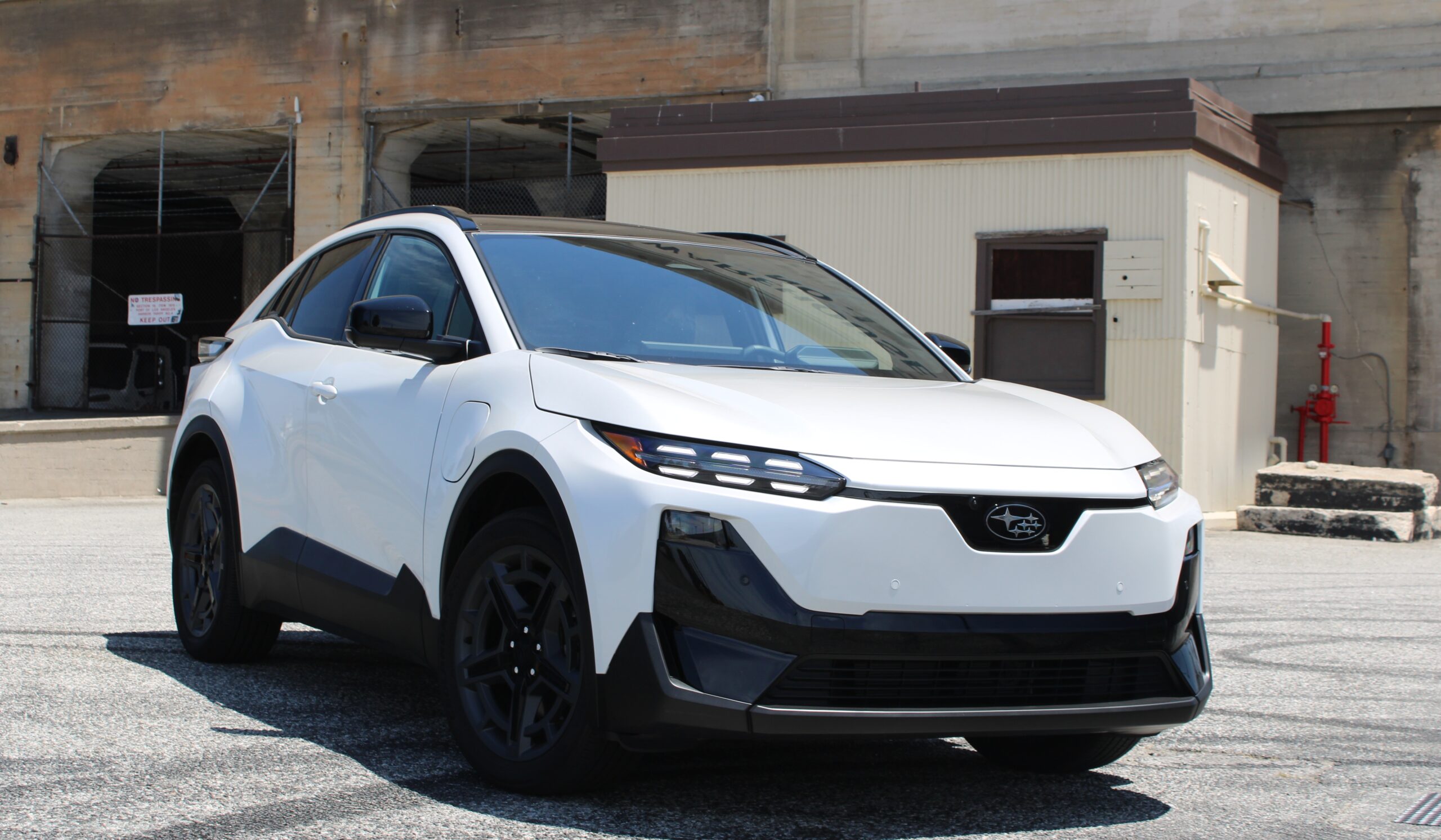
The follow-up to the EX60 may have even greater potential. How? It straddles the line between mainstream and luxury, with a reported starting price of $48,000. Called the EX50, this small SUV slots below the EX60, featuring similar dimensions to a Genesis GV60 and the Toyota C-HR/Subaru Uncharted. It also uses the new SPA3 architecture and benefits from the manufacturing advancements introduced by the EX60.
Most importantly, the EX50 further democratizes EVs by making them more affordable through high-tech yet cost-effective manufacturing. In our opinion, this makes the EX50 a more crucial product than the EX60. Its little brother has a greater chance of increasing Volvo’s market share. Furthermore, it gives the brand a second right-sized vehicle in the heart of the market. A proper compact luxury SUV with the latest tech and innovations, and an attractive price tag.
More vehicles are on the way, too. Volvo confirmed a second model with multiple powertrain options last month. This will be built at its South Carolina plant, which currently makes the EX90 and, soon, the XC60. We suspect this is the next XC90 built on a heavily modified SPA1 platform (dubbed SPA1.5). Between the EX50, EX60, XC60, and XC90, Volvo’s SUV lineup covers all core volume segments with an eye toward profitability.


Not Just SUVs
Volvo’s product offensive seems to lack diversity. Unfortunately, that’s just the cold truth, with all markets pivoting towards SUVs. Thankfully, hope isn’t lost because part of Volvo’s seven-model initative for the western markets (mainly Europe and North America) includes two “low cars.” It confirmed this alongside two large vehicles for North America during its last strategy update back in September.
Back in May, Spanish outlet motor.es posted spy shots of what looks like a prototype of one of these “low cars.” The sedan, likely named the ES60, is aimed directly at the likes of the BMW i3 and Mercedes-Benz C-Class Electric. Like the EX60, it rides on the SPA3 architecture and features an 800-volt electrical architecture. However, information remains thin on the ES60 and its wagon counterpart, likely named the EV60 or EV70.
With Volvo’s region-focused approach, the 50 and 60 series form the entry point, especially here in North America. These play the most important role in bringing more consumers to the Volvo brand. Having virtually every body style, including Volvo’s iconic wagons, at the heart of the market is a sound move. Will it succeed? We hope so.
Source: Volvo