Enthusiasts adore the iconic Honda CR-X. Even today, it embodies the best of Honda. However, its supposed successor, the CR-Z, never quite captured its magic. Yes, it weighed less than 3,000 pounds, and it handled well, but its hybrid powertrain never quite matched the chassis’ energy. As a result, it didn’t have the same sporty personality as its legendary predecessor. What if we told you the real CR-X successor wasn’t at Honda? Yes, you read that right, and it’s a car that’s just as quirky. If you guessed the second-generation Hyundai Veloster R-Spec, then you’re correct. How? Let me explain.
Hyundai sought to solidify its performance credentials following the Elantra Sport. That’s where the second-generation Veloster came into the picture. Its lineup consisted of the first-ever N model and the R-Spec, which carried over from the first generation. Whereas the former was an uncompromising, do-it-all hot hatch, Hyundai took the Veloster R-Spec in a different direction. It was more of a momentum car similar to the Mazda MX-5 Miata. More importantly, it came only with a stick, highlighting its enthusiastic leanings. The moment you drove it, the more the R-Spec revealed itself as the true successor to the Honda CR-X.

Hyundai Veloster R-Spec: Fun and Agility First
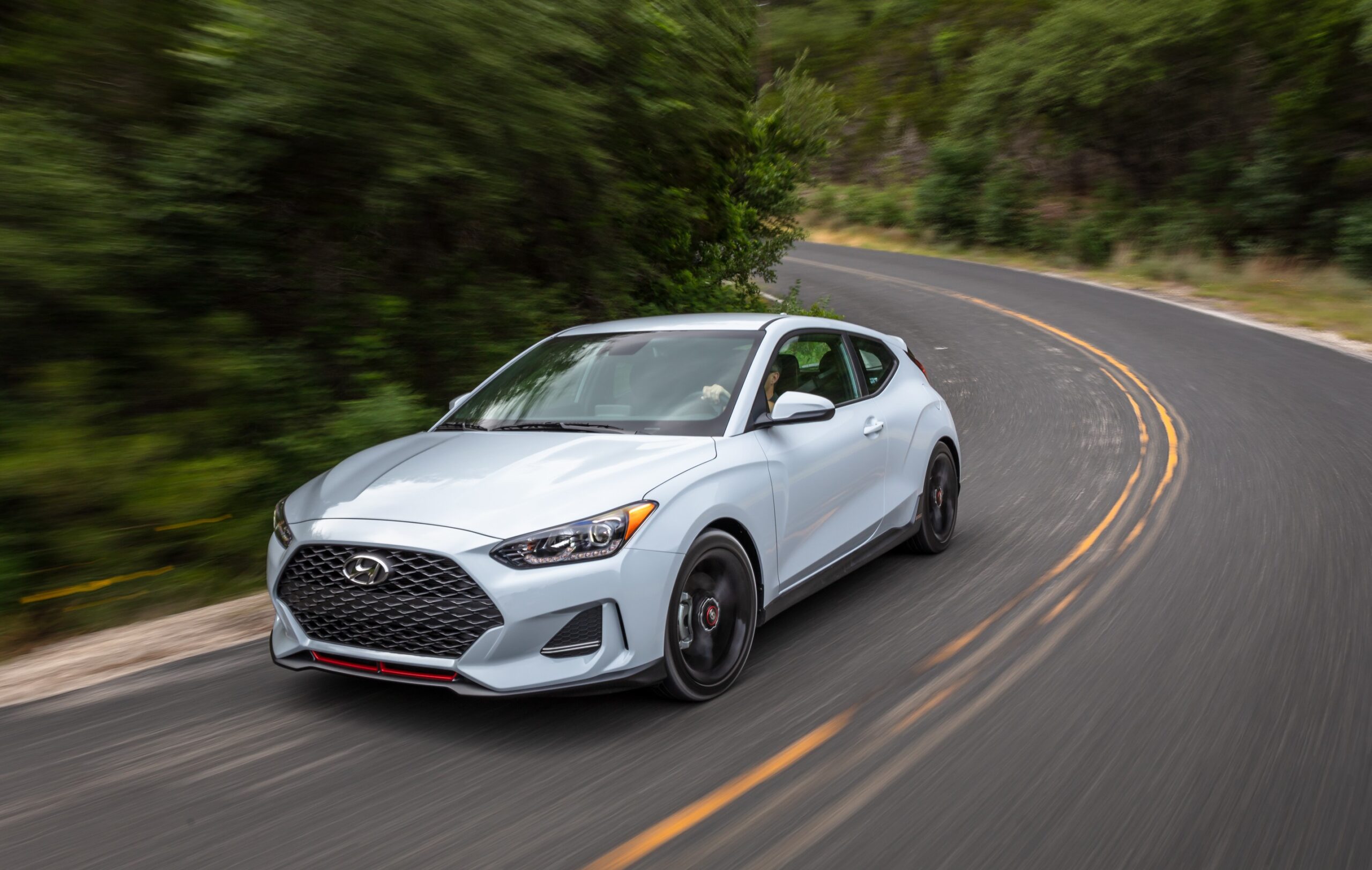
The Veloster R-Spec was all about handling. Unlike Hyundai’s other compact cars, which only included an independent rear suspension on certain models, the Veloster came standard with it regardless of variant. As a result, the Veloster R-Spec possessed the handling chops of a proper hot hatch. Thanks to a masterfully tuned suspension and thicker front and rear anti-roll bars, it cut through corners confidently with minimal body roll. It’s nicely balanced, too, giving you plenty of confidence when tackling the twisties. Like the Elantra Sport, the Veloster R-Spec had a bit of liftoff oversteer, allowing it to rotate through turns. This enhanced its fun-loving personality and helped it feel like a modern CR-X. The only difference? This one came from Korea instead of Japan.
A light curb weight also helped the Veloster R-Spec’s road feel. At around 2,800 pounds, its curb weight was similar to that of a Subaru BRZ and Toyota GR86. This made the Veloster feel incredibly tossable and manageable on the road, especially with its quick and accurate steering. Moreover, R-Spec and manual-equipped Turbo Ultimate models also included Michelin Pilot Sport 4 tires. That means it possessed immense grip through the corners when combined with its impeccable chassis calibration.
Hyundai also included torque vectoring by braking on all second-generation Veloster models. As a result, the R-Spec put power down effectively without the added complexity of a limited-slip differential. It simply applied the brakes gently on the inner wheels to maintain stability and ensure all of its turbocharged power didn’t go to waste. Most importantly, this lightweight hot hatch rode well. Yes, it had a firm suspension, and no, it didn’t beat you up on broken pavement. Credit the 18-inch alloy wheels and tires with generous sidewalls for this impeccable ride and handling balance.


Responsive Turbo Power
Hyundai paired the Veloster R-Spec’s wonderful chassis with a familiar powertrain. Under the hood was a 1.6-liter turbo-four with 201 hp and 195 lb-ft of torque on regular 87 octane fuel. Like in the Elantra Sport, this engine had plenty of power and lots of torque from the low to the mid-range. This time, it had less weight to lug around, resulting in lively acceleration. Additionally, putting the Veloster R-Spec in Sport mode increased the torque to 202 lb-ft and made it more responsive. It was efficient, too, at an EPA-estimated 26/33/29 mpg city/highway/combined. In the real world, it consistently got into the 30s in combined driving and above 40 mpg on the highway.
It also helps that Hyundai pulled a BMW and underrated the Veloster R-Spec’s version of the 1.6-liter turbo-four. That meant it made more power than what’s on the spec sheet. Plus, it and the Elantra Sport used a smaller turbocharger that spooled up quicker and had a broader torque curve than previous iterations. All of that resulted in a lively powertrain befitting of a hot hatch. When it came to stopping, the R-Spec delivered there too, thanks to powerful 12-inch front and 10.4-inch rear discs. Plus, a firm yet reassuringly communicative pedal added to its sporty, driver-centric personality.
Best of all, the R-Spec came paired to a sweet six-speed manual transmission with a B&M Racing short shifter from the factory. This gave it satisfyingly short throws that made this car a joy to toss around. Plus, the clutch had a clear engagement point right in the middle of the travel, making it so easy to drive in traffic. Although not as snickety or precise as the Honda CR-X, this gearbox remains a treat, especially when combined with the world-class mechanical bits around it.
Quirky and Practical
The second-generation Veloster R-Spec embraced its quirky design. Its asymmetrical layout remained a hallmark, coupe on one side, conventional hatchback on the other. The R-Spec adds subtle design cues like a mesh grille with a red accent at the bottom and black 18-inch alloy wheels with red center accents. It also had a pleasantly raspy growl coming from its dual center-mounted exhaust, just like the Elantra Sport sedan.
Inside, the R-Spec featured two-tone black and grey cloth upholstery with yellow accents throughout the cabin. It also had a racing flag-like pattern embedded on the dash to hint that this isn’t just a quirky-looking hatchback. Seating, however, was limited to four, and required one rear passenger to slide all the way across since the driver’s side only had one large door. Meanwhile, cargo capacity was surprisingly massive for a small car, especially with the rear seats folded. Despite the hard plastics, fit and finish felt solid, with the entire car exuding quality and solidity the moment you got in it.
In typical Hyundai fashion, the Veloster R-Spec didn’t skimp on the tech. The standard eight-inch touchscreen worked flawlessly and included Apple CarPlay and Android Auto compatibility. It kept submenus to a minimum, resulting in a refreshingly easy-to-use interface. Meanwhile, the eight-speaker Infinity premium audio system did a great job immersing the cabin and sounded clear.
On the other hand, the Veloster’s active safety tech never got intrusive. They worked exactly as they should: as assistance features that seamlessly helped you out instead of attempting to drive for you. The only caveat here is that adaptive cruise control only came on the Turbo Ultimate model with the optional seven-speed dual-clutch automatic transmission. Everything else, including models with the stick shift, didn’t get it.

Hyundai Veloster R-Spec: The Modern CR-X?
Hyundai made a statement with the Veloster R-Spec. This back-to-basics lightweight hot hatch punches way above its weight. A beautifully tuned chassis, turbocharged power, a versatile interior, and eye-catching style culminate in one of the best front-drive performance cars in recent memory. That’s before you even consider its more potent sibling, the Veloster N.
Was the R-Spec the real Honda CR-X successor? Hell yes, it was. It brought the CR-X to the modern age with a quirky design and a bit more power. For less than $25,000, this incredible all-around hot hatch redefined the meaning of value. It emphasized fun and engagement over outright performance, and it made you smile on every drive. Most importantly, it did so without breaking the bank.